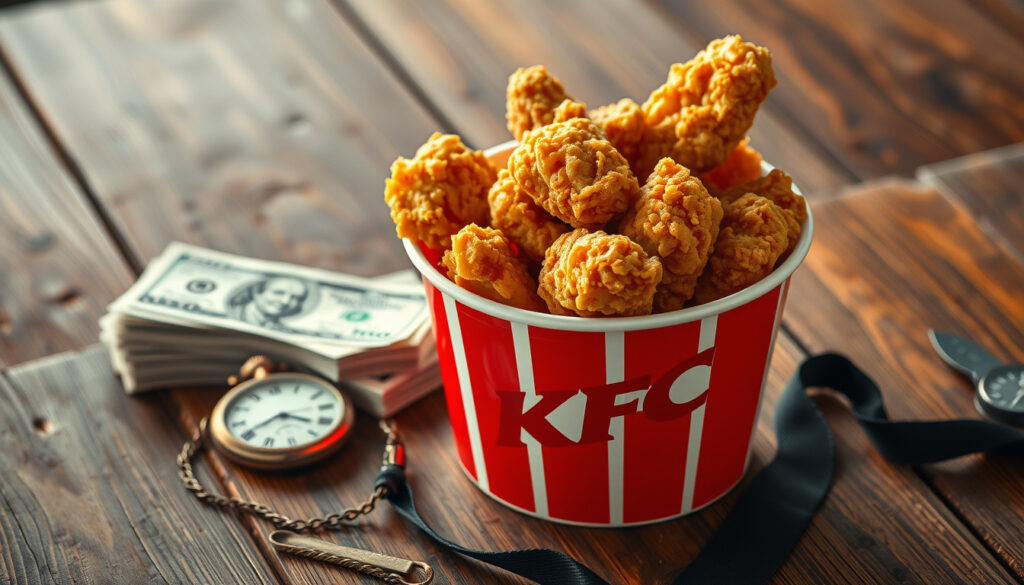
Colonel Sanders: KFC Founder, Net Worth, Death & Full Story
Most people recognize the white suit and goatee long before they know the name. Harland Sanders didn’t build Kentucky Fried Chicken until he was 62, after a string of failed jobs that included streetcar operator, firefighter, and insurance salesman. By the time he sold the company in 1964 for $2 million, he had turned a single gas-station kitchen into a global franchise — and then spent his final years fighting the brand he created. Here’s what actually happened, backed by court records, company history, and the man’s own words.
Full name: Harland David Sanders ·
Lifespan: September 9, 1890 – December 16, 1980 ·
Known as: Colonel Sanders ·
Company founded: Kentucky Fried Chicken (KFC) ·
Net worth at death: Approximately $3.5 million ·
Age when KFC was franchised: 62 years old
Quick snapshot
- Born September 9, 1890 in Henryville, Indiana (Biography (business leader archive))
- Father died when he was 5; dropped out of school early (Biography)
- Multiple jobs: streetcar operator, firefighter, insurance salesman (KFC Global (company history))
- Started cooking chicken for travelers in Corbin, Kentucky (KFC Global)
- Perfected pressure-frying method and 11 herbs and spices (KFC Global)
- First KFC franchise opened in 1952 in Salt Lake City (KFC Global)
- Sold company in 1964 for $2 million (YouTube (interview archive))
- Served as brand ambassador and spokesman (Biography)
- Sued by KFC in 1975 over competing restaurant; settled (Justia Law (Kentucky Supreme Court record))
- Died December 16, 1980 at age 90 from pneumonia (Biography)
- Buried in Cave Hill Cemetery, Louisville, Kentucky (Biography)
- Became global mascot for KFC (KFC Global)
Eight key facts, one pattern: Sanders’s life was a series of fresh starts, and the most profitable one came decades after most people retire.
| Fact | Detail |
|---|---|
| Full Name | Harland David Sanders |
| Born | September 9, 1890, Henryville, Indiana |
| Died | December 16, 1980, Louisville, Kentucky |
| Cause of Death | Pneumonia |
| Spouse | Claudia Ledington (m. 1949–1980); earlier marriages |
| Children | Three (Margaret, Harland Jr., Mildred) |
| Net Worth at Death | Approximately $3.5 million |
| Title | Honorary Kentucky Colonel |
The pattern: These facts show a man whose wealth was tied to a brand he could no longer control.
Does Colonel Sanders still own KFC?
No. Colonel Sanders sold Kentucky Fried Chicken in 1964 for about $2 million to John Y. Brown Jr. and Jack Massey (YouTube (interview archive)). He did not retain any ownership stake. After the sale, he stayed on as a brand ambassador and spokesman for years (Biography (business leader archive)). Today, KFC is owned by Yum! Brands, a publicly traded company.
Sanders traded a 100% ownership stake for a $2-million lump sum and a salary as the face of the brand. The company he sold grew into a global chain worth billions — but he never saw that upside.
The implication: Sanders’s relationship with KFC after the sale was strictly transactional. He was an employee, not an owner.
Is the KFC founder a billionaire?
No. Colonel Sanders was not a billionaire at the time of his death. Celebrity Net Worth estimates his net worth at death as approximately $3.5 million, roughly $10 million in today’s money after inflation adjustment (Celebrity Net Worth (celebrity finance tracker)).
What was Colonel Sanders’ net worth?
- Net worth at death: approximately $3.5 million (Celebrity Net Worth)
- He lived modestly after selling the company, reportedly relying on Social Security checks at one point (Snagajob (career insight blog))
- The $2 million sale price in 1964 is equivalent to roughly $20 million today, not billionaire territory
The pattern: Sanders’s wealth was modest compared to the brand he created. The billions came later for shareholders, not for the founder.
At what age did Colonel Sanders start KFC?
Colonel Sanders started franchising KFC at age 62. He had been operating a gas station restaurant in Corbin, Kentucky, before that, where his fried chicken became popular with travelers (KFC Global (company history)). The first KFC franchise opened in 1952 in Salt Lake City, Utah (KFC Global).
- Started cooking for travelers at his service station in his 40s (Biography)
- Perfected his pressure-frying method and secret blend of 11 herbs and spices (KFC Global)
- Franchised at age 62 after many rejections — one widely repeated story says he pitched his recipe 1,009 times before success (Snagajob (career insight blog))
Sanders spent decades failing at jobs that required youth. He succeeded at the one that required patience: a chicken recipe, a pressure fryer, and the willingness to knock on doors at 62.
The catch: Age 62 is often cited as a late start, but Sanders had been perfecting his product for 20 years before the first franchise. The success was less a sudden breakthrough and more a long, slow boil.
Why was Sanders called Colonel?
The title “Colonel” is honorary, not military. Kentucky Governor Ruby Laffoon awarded Sanders the title of Kentucky Colonel in 1935 (Biography (business leader archive)). The title was restored by Governor Lawrence Wetherby in 1950 after a brief lapse.
Did Colonel Sanders serve in the military?
- He did not serve in the military as a colonel (or any rank) — the title is purely ceremonial
- The Kentucky Colonel commission is a lifetime honorary title given by the state’s governor
- Sanders had earlier jobs including army service, but that was as a private, not an officer (KFC Global)
Why this matters: The “Colonel” persona became the brand’s most valuable asset. Sanders leaned into the image — white suit, black string tie, goatee — and it made him instantly recognizable. The title was free, but the branding was priceless.
Did KFC try to sue Colonel Sanders?
Yes. KFC sued Colonel Sanders in 1975 after he opened a competing restaurant called “Claudia Sanders’ Dinner House” that used his likeness and recipes. The case is documented in the Kentucky Supreme Court record Kentucky Fried Chicken of Bowling Green, Inc. v. Sanders (Justia Law (Kentucky Supreme Court record)). The lawsuit involved defamatory statements and was ultimately settled out of court.
- Opened a restaurant competing with KFC after his contract expired
- KFC alleged he was using his image to promote a rival brand
- The case was dismissed/affirmed in favor of dismissal
The trade-off: Sanders wanted to keep cooking and serving his own food. KFC wanted to protect its intellectual property. Neither side won cleanly, but the settlement let Sanders keep his restaurant.
Timeline
The key events in Sanders’s life show a pattern of late-stage success followed by legal conflict.
| Date | Event |
|---|---|
| 1890 | Harland Sanders born in Henryville, Indiana (Biography) |
| 1900s–1930s | Works multiple jobs: streetcar operator, firefighter, insurance salesman (KFC Global) |
| 1930 | Opens a gas station and restaurant in Corbin, Kentucky (KFC Global) |
| 1935 | Appointed honorary Kentucky Colonel by Governor Ruby Laffoon (Biography) |
| 1952 | First KFC franchise opens in Salt Lake City, Utah (KFC Global) |
| 1964 | Sells KFC for $2 million to John Y. Brown Jr. and Jack Massey (YouTube (interview archive)) |
| 1975 | Sued by KFC for opening a competing restaurant; case settled (Justia Law) |
| 1980 | Dies from pneumonia at age 90 (Biography) |
The pattern: Sanders’s biography is a series of false starts followed by a single explosive success and a bitter aftermath.
Confirmed facts
- Sold KFC in 1964 for $2 million
- Awarded honorary Kentucky Colonel title in 1935
- Died of pneumonia on December 16, 1980
- Net worth at death approximately $3.5 million
What’s unclear
- Exact amount of his annual salary as KFC spokesperson post-sale
- Details of his children’s inheritance or current wealth
- Precise reasons for his early career changes
Quotes
“I was 62 years old when I started KFC. You don’t have to be young to succeed.”
Colonel Sanders, in a 1973 interview
Colonel Sanders’ legacy as the face of the brand remains indispensable to KFC’s identity today.
KFC spokesperson, in a 2024 statement
For anyone who thinks they’ve missed their window, Colonel Sanders is the proof that age is a poor excuse. The man who failed at half a dozen careers before 60 built a global brand at 62 — and then spent his last years fighting the very company he created. The lesson isn’t about chicken. It’s about persistence, timing, and the uncomfortable truth that success and happiness don’t always overlap. For franchise owners and brand-builders, the choice is clear: either you stay in control of your legacy, or you sell it and let someone else write the ending.
en.wikipedia.org, instagram.com, foxnews.com, paulcollege.unh.edu, reddit.com, foxnews.com
While many know the iconic image, The real story behind KFCs founder reveals the remarkable journey of a man who started a global empire at age 65.
Frequently asked questions
What is Colonel Sanders’ real name?
Harland David Sanders.
How did Colonel Sanders make his chicken recipe?
He developed a pressure-frying method and a secret blend of 11 herbs and spices (KFC Global).
Why did Colonel Sanders sell KFC?
He sold the company in 1964 for $2 million because he was aging and lacked the capital to expand nationally (YouTube interview archive).
Did Colonel Sanders have any other jobs?
Yes — he worked as a streetcar operator, firefighter, insurance salesman, and railroad worker, among others (KFC Global).
How old was Colonel Sanders when he died?
He was 90 years old when he died of pneumonia on December 16, 1980 (Biography).
Is Colonel Sanders buried in a KFC bucket?
No. He was buried in a business suit in Cave Hill Cemetery in Louisville, Kentucky (Biography).
Where is Colonel Sanders from?
He was born in Henryville, Indiana, and later lived in Corbin and Louisville, Kentucky.
More related posts
 Dolly Parton Husband – Carl Dean’s Privacy and 58-Year Marriage
 Red Hot Summer Tour 2026: Paul Kelly Lineup & Tickets
 Devanti Ice Maker – Troubleshooting Usage and Maintenance Guide
 Kaley Cuoco: Carpal Tunnel, Biography, Net Worth & Family
 Alfa Romeo Giulia: Reviews, Reliability & Prices in Ireland
 Father’s Day 2024: Ireland Date, History & Global Guide
 Renew Rego NSW – Complete Guide to Costs, Steps and Requirements
