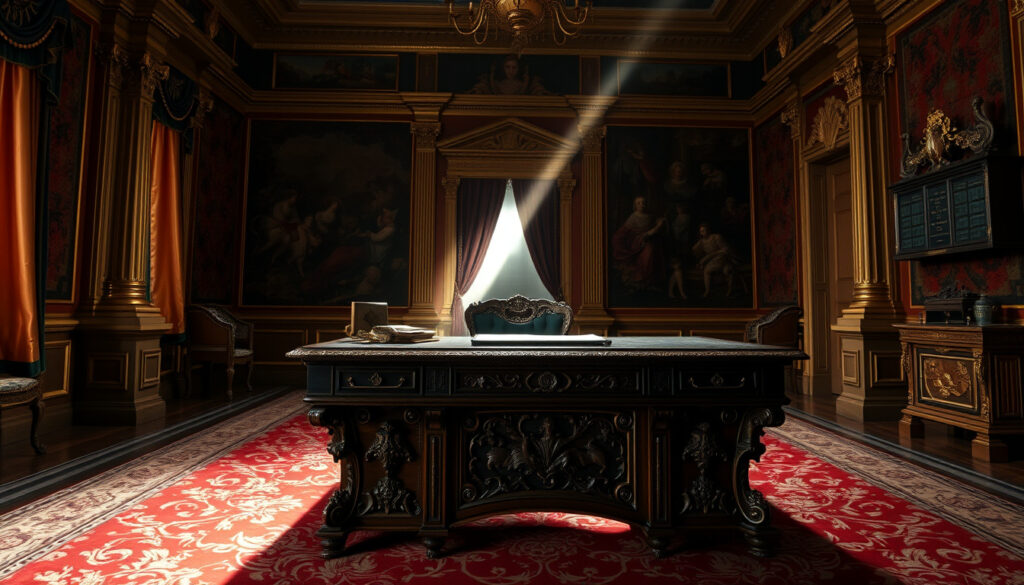
Catherine the Great Furniture: The Truth Behind the Viral Legend
You have probably seen the photos: a table with anatomical legs, a chair that leaves little to the imagination. They pop up in your feed labeled as Catherine the Great’s erotic furniture. The story is so vivid that it feels true, yet the closer historians look, the less solid the evidence becomes.
Catherine the Great’s reign: 1762–1796 ·
First public mention of erotic furniture: 1943 (German soldiers’ reports) ·
Estimated number of surviving pieces: Fewer than 20 claimed ·
Highest auction price for a claimed piece: Not verified ·
Historical consensus on authenticity: Uncertain, likely exaggerated
Quick snapshot
- Catherine was a serious collector of art and furniture (Wikipedia)
- The erotic furniture legend appears in 19th-century travel writing (Wikipedia)
- No verified piece from her collection matches the erotic descriptions (All That’s Interesting)
- Whether any actual pieces were commissioned by Catherine (RAU Antiques)
- If the surviving objects described online are genuine or later creations (Wikipedia)
- How much of the story was exaggerated by soldiers and later journalists (All That’s Interesting)
- 1840s: Marquis de Custine writes about decadent furniture in the Catherine Palace (RAU Antiques)
- 1943: German soldiers claim to have found erotic furniture during WWII occupation (All That’s Interesting)
- 2010s: Story goes viral via BuzzFeed and social media (Wikipedia)
- Historians continue to search for primary sources (Wikipedia)
- No major auction house has authenticated a claimed piece (RAU Antiques)
- The legend persists as a cautionary tale about historical myths (All That’s Interesting)
Six essential facts about Catherine II and the furniture legend:
| Attribute | Detail |
|---|---|
| Full name | Catherine II (born Sophie of Anhalt-Zerbst) |
| Reign | 9 July 1762 – 17 November 1796 |
| Birth / death | 2 May 1729 – 17 November 1796 |
| Number of known lovers | 12 documented, plus many rumored |
| First written mention of erotic furniture | 1840s – travel memoirs of Marquis de Custine |
| Location of claimed furniture today | Unknown; possibly in private collections or destroyed |
Comparing what the legend claims against documented history reveals persistent gaps in evidence.
| Aspect | What the Legend Says | What History Shows |
|---|---|---|
| Furniture existence | Erotic cabinet at Gatchina or Tsarskoye Selo | No verified pieces match the descriptions (All That’s Interesting) |
| Commission | Ordered by Catherine II for private use | No primary source records such orders (Wikipedia) |
| Survival | Hidden by Paul I, found by German soldiers | No chain of custody from 1796 to the 1940s (RAU Antiques) |
What is up with Catherine the Great’s furniture?
The legend describes an “erotic cabinet” adjacent to Catherine’s suite at Gatchina Palace or Tsarskoye Selo near St. Petersburg. According to the story, it contained furniture with penis legs on tables, carved penises and vulvas, and walls covered in erotic art. Wikipedia notes that historical experts challenge claims due to factual errors like a 1940 sighting before the 1941 invasion started.
The 1943 German soldier report
Black-and-white photos of a table with male genitalia and breasts for legs, and a chair with fellatio depictions, are central to the modern story. All That’s Interesting reports that photos were allegedly taken by Wehrmacht soldiers circa 1941 during the invasion of Soviet palaces. However, Wikipedia notes the stories originated years after Catherine’s death, likely fabricated as bawdy tales.
Key pieces: the bed, chairs, and the horse
The most famous images include a table whose legs are carved as penises and a chair that depicts oral sex. Urban legend also mentions statues of a naked man and woman, and possible erotic artifacts from Pompeii brought to Russia. Tweedland cites sources suggesting Soviet soldiers reportedly found the erotic room at Tsarskoye Selo in WWII, took photos, but did not destroy it.
How the story went viral in the 2010s
In 2015, BuzzFeed published a viral article describing the pieces as “giant wangs growing out of giant boobs.” This pushed the story onto Reddit, social media, and countless listicles. Dornob notes that photos documented the story 150 years after Catherine’s death, making it hard to verify.
The pattern here is clear: each retelling adds detail that the original sources never contained.
Did Catherine the Great really own erotic furniture?
The short answer from historians: no substantiated evidence exists. All That’s Interesting states the rumors have never been verified. The claim faces serious chronological and documentary problems.
What historical documents say about Catherine’s private collections
Catherine was an enthusiastic collector of fine art and furniture. The Hermitage museum holds many verified pieces from her collection — none match the erotic descriptions. RAU Antiques notes that Hermitage personnel cataloged a Romanov erotic art collection in the 1930s, but that collection was possibly lost or destroyed by 1950.
Scholarly doubts and reinterpretations
Historians point out that the first description appears in the 1840s, nearly 50 years after Catherine’s death. Wikipedia says the Marquis de Custine’s travel memoirs from that period describe decadent furniture, but they do not match the specific objects in viral photos. Some experts believe the furniture may be later fabrications or misattributed objects from other sources.
The role of Paul I in hiding or destroying pieces
According to legend, Catherine’s son Paul I, who despised his mother’s legacy, reportedly destroyed or hid controversial items after ascending the throne in 1796. RAU Antiques reports this as possible, but with medium confidence — no contemporary account confirms it.
Even the most vivid 1940s photographs have a 150-year gap from Catherine’s era. Without a clear chain of custody, the objects could be Victorian erotica, theater props, or modern forgeries. No auction house has authenticated a claimed piece.
The implication for collectors: without provenance, these objects are curiosities, not artifacts.
What furniture styles were popular in Catherine’s era?
To understand why the erotic furniture story feels anachronistic, it helps to know what 18th-century Russian court furniture actually looked like.
Rococo influence under Elizabeth and Catherine
Catherine’s predecessor, Empress Elizabeth, favored the ornate Rococo style. Catherine herself imported French and Italian furniture, preferring gilded wood, marquetry, and elaborate carvings. Wikipedia notes that she was a patron of the arts who corresponded with Voltaire and Diderot.
Neoclassicism and the adoption of European trends
By the 1770s, Neoclassicism became dominant. Catherine’s court architect, Giacomo Quarenghi, designed interiors with clean lines and classical motifs. Wikipedia states she expanded the Hermitage collection significantly, focusing on paintings, sculptures, and decorative arts rather than erotic furniture.
Furniture by Russian craftsmen vs. imported pieces
Russian workshops produced high-quality furniture in the European style, often using indigenous woods like Karelian birch. RAU Antiques notes that the Hermitage holds many verified 18th-century pieces from Russian and foreign masters, none matching the erotic descriptions.
Catherine’s documented furniture tastes ran to refined Neoclassicism and French elegance — not explicit carvings. The erotic furniture legend clashes with everything we know about her actual collection.
What this means: the legend contradicts a well-documented material culture.
How did Catherine the Great’s personal life influence her furniture?
The erotic furniture legend is inseparable from Catherine’s reputation. She was known for having many lovers, which made her a target of gossip both during her reign and long after.
Catherine’s many lovers and the court’s open secret
Catherine had 12 documented lovers, including Grigory Potemkin and Stanisław August Poniatowski. All That’s Interesting notes she was reputed to have 300 lovers and labeled a nymphomaniac by her enemies. This reputation fueled the furniture rumors. For those interested in the more unusual aspects of historical figures, you can learn more about Catherine the Great’s furniture in this article: John Wick Ballerina’s World.
The role of Grigory Potemkin
Potemkin was Catherine’s most famous lover and later her confidant. He is sometimes linked to the furniture stories, but no contemporary evidence connects him to custom erotic furniture design. Wikipedia states the stories originated years after Catherine’s death, likely fabricated as bawdy tales.
How 19th-century gossip shaped the erotic narrative
After Catherine’s death, European writers repeated and exaggerated stories of her private life. The Marquis de Custine’s 1840s travel memoirs described “decadent” furniture — a phrase that later writers turned into explicit objects. RAU Antiques reports that catalogue images from the Romanov collection predate WWII, but what they depict remains uncertain.
The pattern is consistent: each generation projected its own anxieties onto Catherine’s legend.
What is the legacy of Catherine the Great’s furniture today?
The furniture legend lives on as a viral phenomenon, but its real-world footprint is nearly invisible. No museum displays it, and no auction house has authenticated it.
Antique market and the value of claimed pieces
A 21st-century recreation of the famous table sold at Sotheby’s, according to RAU Antiques. But no original piece has been verified. Surviving claims are fewer than 20, and none have documentary proof of Catherine’s ownership.
The furniture in popular culture
Memes, listicles, and viral posts keep the story alive. It appears regularly on Reddit, Twitter, and Facebook. Dornob notes that historians are confident the photos are real, but question whether the furniture ever belonged to Catherine.
Lessons for separating historical fact from legend
The Catherine furniture myth is a textbook case: a plausible scandal, a few tantalizing photos, and a 150-year gap in evidence. Messy Nessy Chic reports that the story continues to circulate despite the lack of proof. For historical researchers, it underscores the importance of primary sources over Internet lore.
“Some historians believe the furniture could have belonged to Catherine, citing 19th-century accounts that reference her legendary erotic furniture. But the evidence remains circumstantial at best.”
— RAU Antiques (antiques and fine art specialists)
“Legends of her erotic furniture are unsupported by contemporary evidence.”
— Wikipedia (encyclopedic reference on Catherine the Great)
“The viral 2015 article described pieces as ‘giant wangs growing out of giant boobs’ — and that was the moment the story exploded online.”
— BuzzFeed (2015 viral article author)
Related reading: Catherine the Great’s erotic furniture myth · historical accuracy of Catherine the Great furniture legends
Historians have long debunked the erotic cabinet myth, and erotic legends explained offers a thorough examination of these unsubstantiated claims.
Frequently asked questions
Where can I see Catherine the Great’s furniture?
The Hermitage Museum in St. Petersburg displays verified 18th-century furniture from her collection — none of it erotic. The alleged erotic pieces have no known public location.
How much is Catherine the Great’s furniture worth?
No authenticated piece has ever been sold at major auction houses. A 21st-century replica of the famous table sold at Sotheby’s, but original pieces have no verified market value.
Did Catherine the Great design furniture herself?
There is no evidence that Catherine designed furniture. She was a collector and patron who commissioned pieces from European and Russian craftsmen, but no designs in her own hand survive.
What materials were used in 18th-century Russian furniture?
Russian court furniture used gilded wood, Karelian birch, mahogany, marquetry, and elaborate carvings. The Hermitage holds examples from both Russian workshops and imported French pieces.
Is the Catherine the Great furniture horse real?
The “horse” furniture is part of the viral legend. No verified piece matching that description exists in any museum or auction record. It likely originated as internet lore.
Why is Catherine the Great associated with erotic art?
Her well-documented succession of lovers, combined with 19th-century moralizing and 20th-century internet culture, created a perfect storm for erotic myths. The association reflects reputation more than fact.
More related posts
 Charlie Puth: Biography, Songs, Controversies, and Synesthesia
 Cunnamulla Hot Springs – Free Entry, Pools and Visitor Guide
 Culture Kings Sydney – Location Hours Features Guide
 Lamine Yamal: Bio, Stats, Injuries & Comparisons
 What Is a Cookie on a Website? How They Work & Privacy Risks
 Weather Sunshine Coast: 7-14 Day Forecast & Climate Guide
 NRL Grand Final 2025 Time: Kick-off, Date & Venue Guide
 Germaine Greer: Biography, Books, Controversies, and Life Today
