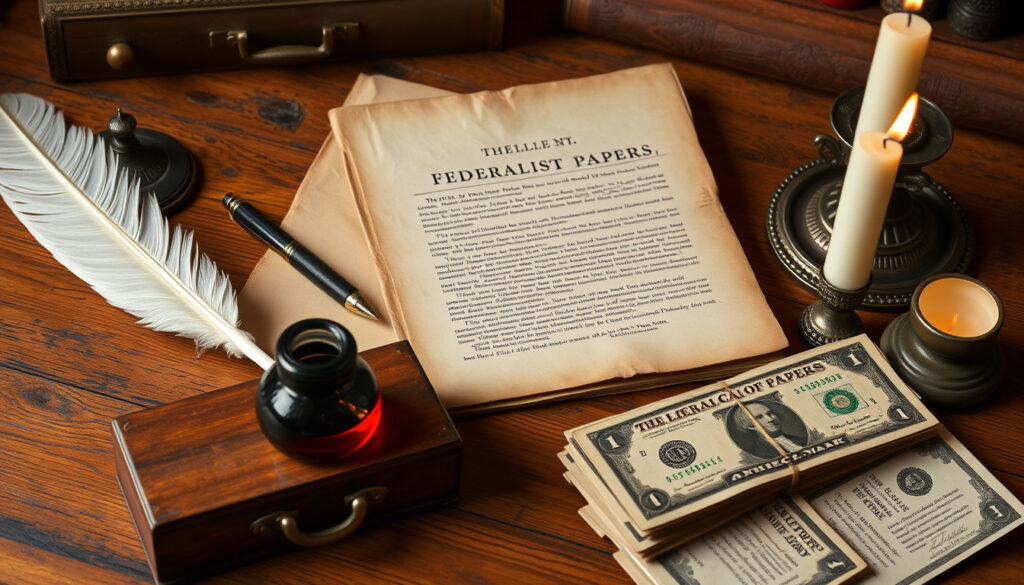
Alexander Hamilton: His Life, Key Facts, and Legacy
Imagine arriving in a new country as a teenager with nothing but ambition and a sharp mind — that’s how Alexander Hamilton began his American story, and within a few decades he’d help shape the nation’s financial system from scratch. He became the first Treasury Secretary in 1789, co-wrote 51 of the 85 Federalist Papers, and died in a duel with Aaron Burr in 1804, leaving a legacy that still sparks controversy.
Born: January 11, 1755 or 1757, Nevis ·
Died: July 12, 1804, New York City (duel) ·
Role: First U.S. Secretary of the Treasury ·
Key Achievement: Co-author of The Federalist Papers ·
Legacy: Featured on the $10 bill
Quick snapshot
- First Secretary of the Treasury (U.S. Department of the Treasury)
- Co-authored 51 Federalist Papers (Gilder Lehrman Institute of American History)
- Died in a duel with Aaron Burr (PBS American Experience)
- Exact birth year: 1755 or 1757 (Wikipedia)
- Whether Hamilton intended to miss Burr or misfired (PBS American Experience)
- Arrived in New York City in 1772 (Library of Congress Guides)
- Became Treasury Secretary in 1789 (U.S. Treasury)
- Killed in duel on July 12, 1804 (PBS American Experience)
- Hamilton’s financial blueprint still anchors modern U.S. fiscal policy (Library of Congress (general reference))
- The Broadway musical “Hamilton” has reignited public interest in his life (Library of Congress (general reference))
Seven key facts about Hamilton, from his birth to his political legacy, reveal the arc of a life that shaped a nation.
| Label | Value |
|---|---|
| Full Name | Alexander Hamilton |
| Birth Date | January 11, 1755 or 1757 |
| Birthplace | Nevis, British West Indies |
| Death Date | July 12, 1804 |
| Political Party | Federalist |
| Spouse | Elizabeth Schuyler |
| Children | 8 |
What was Alexander Hamilton most famous for?
Founding Father and first U.S. Treasury Secretary
Hamilton served as the first Secretary of the Treasury from 1789 to 1795 under President George Washington. According to the U.S. Department of the Treasury (official historical records), he was appointed by Washington to build the nation’s financial infrastructure. His work included funding the Revolutionary War debt and securing federal credit, as documented by the Smithsonian National Postal Museum (exhibition on Hamilton’s Treasury work).
Hamilton’s Treasury agenda wasn’t just about money — it was about credibility. A nation that couldn’t pay its debts had no future, and he knew it.
Author of The Federalist Papers
Hamilton co-wrote at least 51 of the 85 Federalist Papers alongside James Madison and John Jay. The Gilder Lehrman Institute of American History (educational resource) confirms that these essays were instrumental in rallying support for the ratification of the U.S. Constitution.
Architect of the American financial system
Hamilton devised plans for funding the national debt, establishing the First Bank of the United States, and creating a national mint. The National Park Service (historical article on Hamilton) notes that his Treasury reports — including the Report on Public Credit and the Report on a National Bank — laid the groundwork for the modern banking system. The Library of Congress Guides (historical business reference) adds that he helped establish the Customs Service and the federal budget process.
The implication: Hamilton’s financial architecture turned a collection of debt-ridden states into a unified economy with global credibility.
Why did Hamilton not shoot Burr?
Hamilton’s stated intention to throw away his shot
Before the duel, Hamilton wrote a letter stating his intention to “throw away his shot” — meaning he would fire into the air rather than aim at Aaron Burr. This account is preserved by the PBS American Experience (duel documentary). Hamilton reportedly fired into the air or missed deliberately, but Burr’s shot fatally wounded him.
The code of the duel and its consequences
Hamilton’s decision was consistent with the honor code of dueling, which allowed participants to “delope” (fire a wasted shot) without sacrificing honor. However, the PBS American Experience (duel documentary) notes that Burr did not follow the same code. The result was Hamilton’s death on July 12, 1804.
Hamilton’s attempt to preserve his honor by missing cost him his life — a stark reminder that even the most rational minds can be trapped by social codes.
The trade-off: Hamilton’s moral choice to not kill Burr made him a martyr in the eyes of his supporters, but it also left his family without a father and his political legacy incomplete.
What are 5 facts about Alexander Hamilton?
Early life and immigration
Hamilton was born on Nevis in the British West Indies and orphaned as a child. According to the National Archives (Founding Fathers list), he arrived in New York City in 1772 and attended King’s College (now Columbia University).
Military service in the Revolution
He served as George Washington’s aide-de-camp during the Revolutionary War, as documented by the National Park Service (historical article). He also commanded a battalion at the Siege of Yorktown.
Political career and federalism
Hamilton was a delegate to the Constitutional Convention in 1787, per the Gilder Lehrman Institute of American History. He later served as Treasury Secretary and became the leading voice of the Federalist Party.
The Reynolds affair
Hamilton had a public affair with Maria Reynolds, which he admitted in a series of pamphlets. The Ron Chernow biography (author site) details the scandal and its impact on his reputation.
Death by duel
Hamilton died on July 12, 1804, from wounds sustained in a duel with Aaron Burr. The PBS American Experience (duel documentary) confirms the location was Weehawken, New Jersey, the same spot where his son Philip had died in a duel three years earlier.
The pattern: each fact illuminates a different dimension of Hamilton’s complex legacy, from his immigrant origins to his fatal duel.
Why is Hamilton on the $10 dollar bill?
His role as Treasury Secretary
Hamilton’s portrait has appeared on the $10 bill since 1929. The U.S. Department of the Treasury (historical portraits) explains that Treasury Secretary John G. Carlton chose Hamilton’s portrait to replace that of William H. Crawford, honoring Hamilton’s foundational role in the U.S. financial system.
History of U.S. currency portraits
Hamilton is the only non-president to appear on a regularly issued U.S. banknote. The decision reflected his status as a Founding Father and the architect of the nation’s fiscal framework. The Library of Congress (general reference) notes that his image on the $10 bill is a lasting tribute to his contributions to federal finance.
Why this matters: Every time someone uses a $10 bill, they’re touching a piece of Hamilton’s legacy — a reminder that the nation’s credit is built on his ideas.
Why did Burr shoot Hamilton?
Political rivalry between Hamilton and Burr
Hamilton opposed Aaron Burr’s 1804 campaign for New York governor, making him a political enemy. According to the PBS American Experience (duel documentary), Hamilton reportedly called Burr a “dangerous man” at a private dinner, and the remark was published in a newspaper.
The insult that triggered the duel
Burr demanded satisfaction, and when Hamilton refused to apologize, Burr challenged him to a duel. The duel took place on July 11, 1804, in Weehawken, New Jersey. The PBS American Experience (duel documentary) provides the full account of the exchange of letters and the eventual meeting.
Burr’s perceived loss of honor
Burr’s political career was effectively over after the duel. The PBS American Experience (duel documentary) notes that Burr was indicted for murder in New York and New Jersey, though he was never tried. He fled to the South and later faced charges of treason for his involvement in the Burr conspiracy.
The duel wasn’t just a personal grudge — it was the culmination of a decade of political warfare. Burr lost the governorship, the presidency, and eventually his freedom. Hamilton lost his life.
The consequence: Burr’s actions destroyed his own political career while Hamilton’s death cemented his legacy as a martyr.
Timeline
Six key moments trace Hamilton’s journey from Caribbean orphan to American founder.
| Date or Period | Event | Source |
|---|---|---|
| 1755 or 1757 | Born on Nevis | National Archives |
| 1772 | Arrived in New York City | Library of Congress Guides |
| 1776-1781 | Served in the Continental Army | National Park Service |
| 1788 | Federalist Papers published | Gilder Lehrman Institute |
| 1789-1795 | First U.S. Secretary of the Treasury | U.S. Treasury |
| 1804 | Died in duel with Aaron Burr | PBS American Experience |
Clarity: Confirmed facts vs. What’s unclear
Confirmed facts
- Hamilton was the first Secretary of the Treasury (U.S. Treasury)
- He died from a wound sustained in a duel with Aaron Burr (PBS American Experience)
- He co-authored The Federalist Papers (Gilder Lehrman Institute)
What’s unclear
- Exact birth year (1755 vs 1757) — institutional sources favor 1757, but the dispute persists (Wikipedia)
- Whether Hamilton’s shot was truly aimed away — some historians argue he may have fired accidentally (PBS American Experience)
- Exact year of arrival in New York City (1772 vs 1773) (Library of Congress Guides)
Quotes
“Hamilton was a dazzlingly brilliant, combustible, and often self-destructive figure.”
Ron Chernow, biographer, in his book Alexander Hamilton
“I have resolved, if our interview is conducted in the usual manner, to throw away my first fire.”
Alexander Hamilton, in a pre-duel letter, as cited by PBS American Experience
For modern policymakers, the lesson is clear: a nation’s financial credibility is built on the ideas of a single, flawed genius — but maintaining it requires collective responsibility. Without Hamilton’s blueprint, America might have remained a fragile experiment. With it, the country became a global economic power.
Frequently asked questions
What was Alexander Hamilton’s role in the American Revolution?
He served as an artillery captain, then as George Washington’s aide-de-camp, and later commanded a battalion at Yorktown. (National Park Service)
Did Alexander Hamilton own slaves?
Yes, historical records show that Hamilton purchased and owned slaves during his lifetime, though his views on slavery evolved. (Library of Congress)
How old was Alexander Hamilton when he became Treasury Secretary?
He was 32 or 34, depending on his birth year. He became Treasury Secretary in 1789. (U.S. Treasury)
Was Alexander Hamilton related to George Washington?
No, they were not related by blood. Hamilton served as Washington’s aide and later Treasury Secretary. (National Park Service)
What is the musical Hamilton about?
The Broadway musical “Hamilton” by Lin-Manuel Miranda tells the story of Alexander Hamilton’s life, using hip-hop and R&B to dramatize his rise and fall. It premiered in 2015.
Did Alexander Hamilton write the Federalist Papers alone?
No, he co-wrote them with James Madison and John Jay. Hamilton wrote the majority (51 out of 85). (Gilder Lehrman Institute)
Why is Alexander Hamilton considered a Founding Father?
He was a delegate to the Constitutional Convention, co-author of the Federalist Papers, and the first Treasury Secretary — all roles that helped establish the United States as a nation. (National Archives)
More related posts
 Utkarsh Ambudkar: Ethnicity, Wife, Kids, Hamilton Exit
 Nepal National Cricket Team vs United Arab Emirates National Cricket Team Match Scorecard – Stats, Results and Official Sources
 Stassi Schroeder: Firing, Sobriety, Kids & Net Worth
 How Long Does Menopause Last? Duration, Symptoms & Stages
 Richard Ayoade: Biography, Family, and Key Facts
 Marilyn Manson: Gender, Allegations, Net Worth, Career
 IGA Specials This Week – Latest Catalogues and Local Deals
 John Kiriakou: CIA Whistleblower Accusation and Sentence
