Diego Maradona: Death, Career, Pelé & Messi Relationship – Full Guide
Few footballers hold a country’s imagination the way Diego Maradona still does. When he died on November 25, 2020, at 60, in Tigre outside Buenos Aires, the man who had dragged Argentina to the 1986 World Cup title left behind a messier legacy than any idol before him.
Matches for Argentina: 91 · Goals for Argentina: 34 · Club appearances: 490 · Club goals: 259 · Age at death: 60 · Date of death: November 25, 2020
Quick snapshot
- Died on November 25, 2020, at age 60, at his home in Tigre, Argentina (BBC News).
- Led Argentina to the 1986 World Cup title (The Independent).
- Finished with 91 caps and 34 goals for Argentina (ESPN Deportes).
- Won two Serie A titles with Napoli, in 1987 and 1990 (per SportsAdda).
- His exact last words: family members said he said “I don’t feel well,” but no official medical record exists (BBC News).
- His true net worth: estimates range from $500,000 to $75–100 million (BBC News).
- Whether his final weeks involved medical negligence is still the subject of an Argentine criminal investigation (BBC News).
- Hospitalized for a subdural hematoma in November 2020, released, then dead two weeks later (BBC News).
- 1991: first cocaine ban, 15 months, while at Napoli (per SportsAdda).
- 1997: retirement after his last match for Boca Juniors (per SportsAdda).
- 1986: the World Cup that made him untouchable (The Independent).
- The criminal case over his medical care continues to shadow his final months (BBC News).
- His estate’s value is unresolved while inheritance reports and debt claims are weighed (BBC News).
- The GOAT debate shifted again when Messi won the 2022 World Cup (The Independent).
Ten rows compress the contradiction: a 5 ft 5 in playmaker with 91 Argentina caps, 345 career goals, and exactly one World Cup — the one that made him immortal.
| Category | Detail |
|---|---|
| Full name | Diego Armando Maradona |
| Born | October 30, 1960 (per SportsAdda) |
| Died | November 25, 2020 (BBC News) |
| Position | Attacking midfielder / forward |
| National team caps | 91 (ESPN Deportes) |
| National team goals | 34 (ESPN Deportes) |
| Total career goals | 345 (per SportsAdda) |
| World Cup matches | 21 (The Independent) |
| World Cup goals | 8 (The Independent) |
| World Cup wins | 1, in 1986 (The Independent) |
What happened to Diego Maradona?
On the afternoon of November 25, 2020, Maradona went into cardiac arrest at his home in Tigre, on the outskirts of Buenos Aires. Paramedics could not revive him. The official cause of death was acute pulmonary edema secondary to chronic heart failure — the bill for decades of cocaine and alcohol use, weight problems, and a body pushed past its limits (per BBC News, the UK’s public broadcaster).
His death did not end the legal questions. Argentine prosecutors opened a criminal investigation into the quality of the medical care he received in his final weeks, turning a private tragedy into a public reckoning (BBC News).
Where was Maradona when he died?
Place: Tigre, Buenos Aires Province · Country: Argentina · Age: 60
He had been released from hospital on November 11 after surgery for a subdural hematoma — a blood clot on the brain — and was recovering at home in Tigre (BBC News). Two weeks later, his heart gave out.
What this means: Maradona’s last month — surgery, discharge, home, death — was the whole arc of his life in miniature.
Who is Diego Maradona to Messi?
For Lionel Messi, Maradona was both a mentor and the standard he was measured against from the day he arrived in Europe’s elite (per ESPN Deportes, ESPN’s Spanish-language football desk). Maradona had been the reason Argentina expected magic from the No. 10 shirt; Messi spent his whole career being judged against that expectation.
Did Messi attend Maradona’s funeral?
Yes. The morning after Maradona’s death, Lionel Messi went to the wake at the Casa Rosada, the presidential palace in Buenos Aires (BBC News).
The Maradona–Messi relationship
- Maradona defended Messi publicly during Messi’s difficult early years with Argentina (ESPN Deportes).
- The two shared the pitch in a 2018 charity match (ESPN Deportes).
- After Maradona’s death, Messi called him “the greatest Argentine of all time” (ESPN Deportes).
The relationship was never simple. For a decade and a half, every Argentina failure was framed as proof that Messi wasn’t Maradona, and every Messi masterclass reopened the question of who deserved the crown.
What this means: Messi’s 2022 World Cup win changed his side of the comparison forever; he now shares the one title that once belonged to Maradona alone (The Independent).
What ended Maradona’s career?
Drugs ended it first, and his body finished the job. In 1991, while at Napoli, Maradona tested positive for cocaine and was handed a 15-month ban (per SportsAdda). He never again reached the sustained level of his 1980s peak.
The 1994 World Cup ending
- Maradona played in four World Cups: 1982, 1986, 1990, and 1994 (The Independent).
- He scored 8 goals in 21 World Cup matches (The Independent).
- In 1994, he was sent home after testing positive for a banned stimulant (The Independent).
After 1994 came Sevilla, Newell’s Old Boys, then a final return to Boca Juniors. His last official match came in 1997, and at 37 he retired — slower, heavier, and more radioactive to sponsors than the man who had owned the 1986 World Cup (per SportsAdda).
Maradona has the thinnest trophy case of the three GOAT candidates — one World Cup against Pelé’s three and, until 2022, the same total as Messi — and yet no one who watched him doubts the “genius” label.
The pattern: a career that peaked early and ended through a sequence of drug bans and physical decline, not one dramatic moment.
Maradona vs Pelé vs Messi: the numbers that kept the debate alive
World Cups: Pelé 3 · Maradona 1 · Messi 1 · Top-level goals: Pelé 757 · Maradona 346 · Messi 442 · International caps: Pelé 92 · Maradona 91 · Messi 178
Four metrics, one story: Pelé has the titles, Messi has the longevity, Maradona has the moment that defines both.
| Metric | Maradona | Pelé | Messi |
|---|---|---|---|
| World Cups won | 1 (1986) (The Independent) | 3 (1958, 1962, 1970) (BBC Sport) | 1 (2022) (The Independent) |
| World Cup matches | 21 (The Independent) | 14 (BBC Sport) | 34 (ESPN Deportes) |
| Top-level career goals | 346 (Sky Sports) | 757 (Sky Sports) | 442 (Sky Sports) |
| International caps / goals | 91 / 34 (ESPN Deportes) | 92 / 77 (per World Soccer Talk) | 178 / 106 (per World Soccer Talk) |
The numbers have a clear ranking on trophies — Pelé first, then Messi and Maradona — but the “best” verdict changes depending on whether you weight titles, longevity, or peak magic.
For a modern young player carrying that same weight, this profile of Lamine Yamal: Bio, Stats, Injuries & Comparisons shows how early the comparisons arrive.
The trade-off: if the GOAT argument is a trophy count, Maradona loses. If it’s about the single most brilliant performance in World Cup history — the 1986 quarterfinal against England — he may never be beaten.
What condition did Maradona have?
Maradona’s health problems were decades in the making. By the 2010s he was a public symbol of relapse and recovery: weight swings, heart problems, hospital admissions, and a cocaine addiction that never fully released him (BBC News).
The conditions that defined his final decade
- Cocaine addiction: first surfaced with his 1991 positive test at Napoli (per SportsAdda).
- Alcohol and weight problems: led to gastric bypass surgery in 2005 (per SportsAdda).
- Chronic heart failure: the listed cause of death was acute pulmonary edema secondary to this condition (BBC News).
The gastric bypass helped him drop weight and appeared to reset his health for a few years, but the underlying pattern of addiction always reasserted itself. By November 2020, his heart had no reserve left.
The subdural hematoma and his final hospitalization
Admitted: November 3, 2020 · Diagnosis: subdural hematoma · Discharged: November 11, 2020
The two-week turn from hospital to coffin was fast even by his standards. BBC News described his death as coming after a period of serious health problems and a recent surgery — in this case, an operation to relieve bleeding on the brain.
For a current athlete managing the same public triangle of performance, health, and money, this Travis Kelce: Career, Health, Net Worth & Swift Relationship breakdown shows how quickly the questions arrive in a different sport entirely.
Why this matters: his death certificate names heart failure, but the fuller mechanism was decades of addiction that left his heart unable to survive one more medical crisis.
What were Maradona’s last words?
According to family members, Maradona’s last coherent words were said a few hours before he died: “I don’t feel well.” (BBC News)
What the family said
“I don’t feel well.”
— Maradona’s family, as reported by BBC News
His nephew said he spoke those words during the night, hours before his heart stopped. There is no official medical recording of the moment, so the account rests entirely on family testimony.
The catch: last words from a famous death are fragile history, especially when the family became central to the legal case over his care. The date and place are solid; the sentence is not.
Did Pelé and Ronaldo know Maradona?
What did Pelé say when Maradona died?
“One day we will play together in the sky.”
— Pelé, in an Instagram tribute after Maradona’s death (BBC News)
Pelé called Maradona “a friend, a genius, a legend” in that same post (BBC News). Cristiano Ronaldo also posted a tribute (The Independent), and the Brazilian Ronaldo — who met Maradona several times at FIFA events — called him “an inspiration for all of us” (The Independent).
The tributes from Pelé and the two Ronaldos framed him as a shared legend, not a divided one. The world’s greatest players insisted the crown belonged to someone else.
How much money did Maradona have when he died?
No one knows exactly, and the gap between the estimates is itself the story. BBC News reported that Argentine media widely cited an inheritance estimate between $75 million and $100 million, while Celebrity Net Worth put his net worth at just $500,000 at the time of death.
The $500,000 question
- Celebrity Net Worth estimate at death: $500,000 (BBC News).
- Argentine media inheritance reports: $75–100 million (BBC News).
- Debts: $10–15 million in back taxes owed to the Italian government (per SportsAdda).
- Estate: properties in Argentina and Dubai, plus unresolved legal disputes over child support (per SportsAdda).
For anyone tracking the “Maradona net worth” figure, the real answer is that he died rich in legacy and poor by his own standard. For his heirs, the question is whether the debts or the assets win.
Timeline: Maradona, from Lanús to Tigre
Eleven dates trace the arc: a boy from the outskirts, a World Cup, two bans, a comeback, and a death that opened a criminal file.
| Date | Event |
|---|---|
| Born in Lanús, Argentina (per SportsAdda). | |
| 1976–1981 | Professional debut with Argentinos Juniors at age 15 (per SportsAdda). |
| 1982–1984 | Barcelona spell; won the Copa del Rey (per SportsAdda). |
| 1984–1991 | Napoli era; two Serie A titles, UEFA Cup, Coppa Italia (per SportsAdda). |
| Led Argentina to the World Cup; scored the “Hand of God” goal and the “Goal of the Century” vs England (The Independent). | |
| Positive cocaine test at Napoli; 15-month ban (per SportsAdda). | |
| Sent home from the World Cup after a positive drug test (The Independent). | |
| Retired after his final match with Boca Juniors (per SportsAdda). | |
| Gastric bypass surgery (per SportsAdda). | |
| Hospitalized for a subdural hematoma; released November 11 (BBC News). | |
| Died of heart failure at home in Tigre, Argentina (BBC News). |
The pattern: peak, punishment, comeback, repeat. Maradona’s final month — surgery, discharge, home, death — compressed the whole cycle into three weeks.
Who is best: Pelé or Maradona?
The numbers show a clear ranking on trophies — Pelé first, then Messi and Maradona — but the “best” verdict changes depending on whether you weight titles, longevity, or peak magic.
Maradona vs Pelé: goals, titles, and impact
Pelé scored 767 career goals in 831 matches, Maradona scored 346 career goals in 688 matches. Pelé won three World Cups, Maradona won one. Yet no one who watched Maradona at his peak doubts the “genius” label.
skysports.com, sports.ndtv.com, sportsadda.asia, bbc.com, espn.com, beinsports.com
Frequently asked questions
What was Diego Maradona’s net worth when he died?
Estimates conflict. Celebrity Net Worth put it at about $500,000, while Argentine media reported potential inheritance of $75 million to $100 million (BBC News).
In which city did Diego Maradona die?
He died at his home in Tigre, in Buenos Aires Province, Argentina, on November 25, 2020 (BBC News).
What health problems did Maradona have?
He struggled with cocaine addiction and alcohol use for decades, underwent gastric bypass surgery in 2005, and died of acute pulmonary edema secondary to chronic heart failure (per SportsAdda; BBC News).
What was Maradona’s relationship with Lionel Messi?
Maradona mentored and defended Messi in public, and they shared the pitch in a 2018 charity match. Messi attended Maradona’s wake in 2020 (ESPN Deportes; BBC News).
How many World Cups did Maradona win?
One: the 1986 FIFA World Cup, where he scored the “Hand of God” goal and the “Goal of the Century” against England (The Independent).
Why did Maradona stop playing?
A 15-month ban for cocaine in 1991, a positive test at the 1994 World Cup, and declining fitness pushed him to retirement after his final Boca Juniors match in 1997 (per SportsAdda; The Independent).
More related posts
 Queensland School Holidays 2026: Dates, Terms & Calendar
 Sarah Todd: Partner, Age Gap, Son, and Gary Mehigan Connection
 Jack Whitehall: Biography, Relationship, Net Worth & More
 David Fifita: Salary, ADHD, and move to Rabbitohs in 2026
 Chloe Kelly: Biography, Career Stats, Relationship & Salary
 Madison Bailey: Biography, Age, Sexuality & Outer Banks
 Kim Ji-Won: Age, Height, Net Worth & Relationship Facts
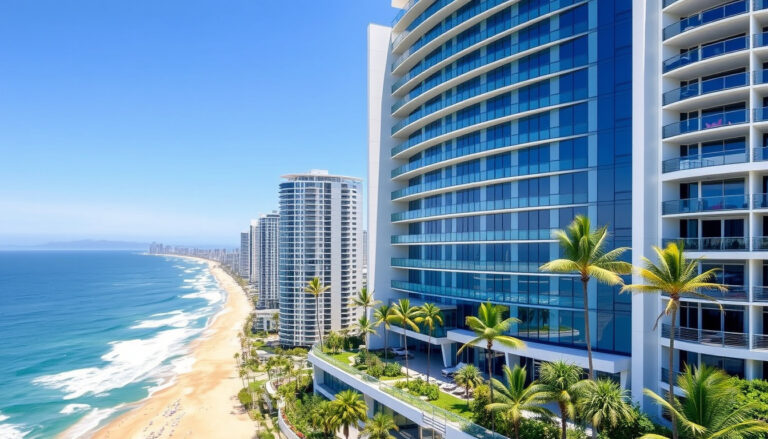 Dorsett Gold Coast Review: Broadbeach Hotel & Location Guide
