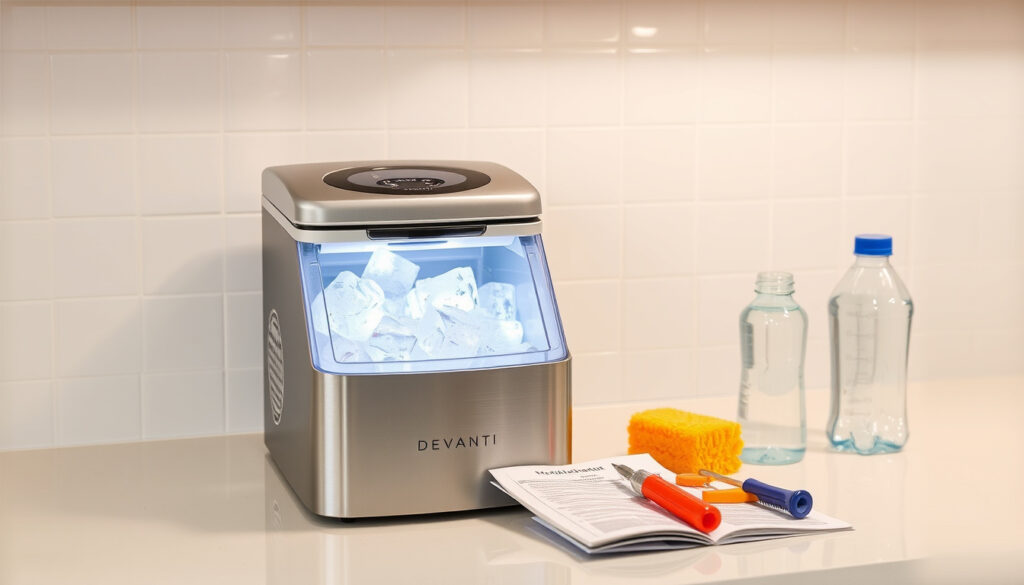
Devanti Ice Maker – Troubleshooting Usage and Maintenance Guide
The Devanti portable countertop ice maker has become a popular choice for Australian households seeking a reliable source of ice without the bulk of a full freezer attachment. These compact appliances, typically part of the HZB-12 series or similar variants, promise daily ice production of approximately 12kg, making them suitable for home entertaining, small gatherings, or everyday use. Understanding how these machines work, common issues that may arise, and proper maintenance procedures can significantly extend their service life and performance.
This guide examines the Devanti ice maker range available in Australia, drawing from official manuals, user reports, and technical documentation to provide a comprehensive overview. Whether troubleshooting a unit that has stopped producing ice, seeking cleaning instructions, or comparing specifications against competing brands, the information presented here aims to address the most common questions consumers encounter.
Why Is My Devanti Ice Maker Not Making Ice?
When a Devanti ice maker fails to produce ice despite running normally, the issue often stems from one of several identifiable components. According to technical repair guides and user troubleshooting documentation, problems typically fall into three categories: sensor and switch failures, water delivery issues, or environmental factors affecting performance.
Identifying Common Faults
One of the most frequently reported problems involves the limit switches that control the ice-making cycle. These small components, located on the left side of the unit, signal when the ice basket has reached capacity or when the water should begin pumping. When the upper limit switch on the right side fails, the compressor and fan may run with frost forming on the evaporator prongs, but the basket remains in the harvesting position and no ice is produced.
Conversely, a faulty lower limit switch can cause the bucket to cycle normally while the water pump and compressor fail to activate entirely. Both switch issues are considered repairable through DIY replacement using basic tools and generic microswitches available from electronics suppliers, according to repair technicians who have documented the process online.
The flashing ice full light can indicate normal standby operation when the basket is correctly positioned. However, persistent flashing combined with no ice production suggests a switch or sensor fault requiring investigation.
Quick Reference Troubleshooting
Check the water reservoir level, ensure the unit is on a stable surface with adequate ventilation, and verify that ambient temperatures remain below 30°C. These environmental factors commonly reduce ice output without indicating a mechanical fault.
| Problem | Common Cause | Initial Solution |
|---|---|---|
| No ice produced | Faulty upper limit switch | Replace switch |
| Bucket cycles but no pump | Faulty lower limit switch | Replace switch |
| Add water indicator on | Low or empty reservoir | Fill to max mark, restart |
| Ice full light flashing | Basket full or sensor triggered | Empty basket or hold select 5 seconds |
| Ice cubes sticking together | Warm ambient or water temperature | Use cool water, reduce room temperature |
| Low ice production | Clogged pump or water line | Clean pump and check for debris |
| Water stops after brief operation | Pump restriction or switch fault | Inspect and clear pump shaft |
Water quality also plays a significant role in reliable ice production. Australian users with hard water report higher instances of pump clogging and mineral buildup on the evaporator prongs. Running clean water through the system after each use and performing regular descaling can prevent many of these blockages from developing. The Australian Consumer Association provides guidance on maintaining portable appliances that may be relevant for owners in regions with challenging water quality.
How Do I Clean My Devanti Ice Maker?
Regular cleaning maintains both ice quality and machine longevity. The Devanti portable ice maker requires maintenance after each extended use period, with the frequency depending on water hardness and usage patterns. Official manuals recommend establishing a consistent cleaning routine to prevent mineral deposits and bacterial growth.
Manual Cleaning Procedure
The standard manual cleaning process begins by unplugging the unit and allowing it to reach room temperature. Water is drained through the front bottom drainage cap, and all removable components including the ice basket and scoop are taken out for individual cleaning. The interior surfaces wipe clean with a soft cloth and water only, as harsh cleaners or abrasive materials can damage the lining and affect future ice quality.
Some models within the Devanti range, particularly the HZB-20AF variant, feature a self-cleaning function activated by pressing and holding the timer or clean button for more than five seconds. This automated program circulates cleaning solution through the water lines before draining, reducing the manual effort required for routine maintenance.
Maintenance Best Practices
Unused water left in the reservoir for more than 12 hours should be drained and replaced. Stagnant water can develop odours and reduce ice quality, particularly in warmer ambient conditions.
For households with hard water, periodic descaling with a suitable appliance descaler helps remove calcium and magnesium deposits that accumulate on internal components. After cleaning, the unit should be allowed to dry completely before the lid is closed for storage. This prevents mould growth and musty odours from developing during periods of non-use. General guidance on appliance maintenance from consumer advocacy groups may offer additional descaling strategies applicable to portable ice makers.
How Do I Use the Devanti Ice Maker?
Proper initial setup and understanding of the basic operating cycle ensures optimal performance from the Devanti ice maker. The process involves straightforward steps that new owners can follow to begin producing ice within minutes of unpacking.
Initial Setup Steps
After removing all packaging materials and transit tapes from the ice shovel, basket, and scoop, the interior should be wiped clean with fresh water. The unit requires placement on a level, stable countertop with sufficient ventilation space around the sides and rear. Ambient room temperature should ideally remain below 30 degrees Celsius for consistent operation.
The water reservoir fills by opening the transparent lid, removing the ice basket, and pouring cool or room-temperature water until it reaches the maximum level mark visible inside the tank. Overfilling can cause leaks, while underfilling reduces the number of ice cycles before requiring a refill. After replacing the basket and closing the lid, the power lead connects to a suitable electrical outlet.
Operating the Controls
The ON/OFF button activates the ice-making cycle, while the ice size selection button toggles between small and large bullet-shaped cubes. Small ice cubes complete their freezing cycle in approximately six to eight minutes, while larger cubes require eight to twelve minutes depending on ambient conditions and water temperature. The indicator panel displays power status, ice full conditions, and water level warnings as appropriate.
When the basket reaches capacity, the ice full indicator illuminates and the unit enters standby mode. Users can either remove ice to continue production or hold the select button for five seconds to trigger ten additional harvest cycles before the sensor reactivates. Should the add water indicator appear, refilling the reservoir and pressing ON/OFF restarts the cycle.
Using pre-cooled or room-temperature water rather than cold water from the refrigerator can improve initial cycle times. The first batch of ice may take slightly longer as the system reaches operating temperature.
What Are Devanti Ice Maker Reviews and Capacity?
Understanding real-world performance and consumer experiences helps prospective buyers set appropriate expectations for the Devanti portable ice maker range. Australian user reports and technical documentation reveal both the capabilities and limitations of these appliances.
Technical Specifications
The Devanti HZB-12 series and similar models sold in Australia feature a two-litre water reservoir and an ice basket capacity of approximately 0.8 to 1 kilogram. Under optimal conditions with ambient temperatures below 25 to 30 degrees Celsius and water temperature under 25 degrees Celsius, these units can produce up to 12 kilograms of ice per 24-hour period.
The compact countertop design measures approximately 25 by 35 by 38 centimetres and weighs between nine and ten kilograms, making it suitable for relocation between locations as needed. Power consumption operates through a compressor-based refrigeration system using R134a refrigerant, with 230V models designed for Australian household electrical systems. Control panels typically include an ON/OFF switch, ice size selector, and indicator lights for power, ice full status, and water level warnings. The Australian Department of Energy provides guidance on understanding appliance energy consumption that may assist buyers evaluating the operational costs of portable ice makers.
User Experiences and Limitations
Australian consumers who have reviewed these products note several consistent themes. The compact design and rapid initial ice production receive positive feedback, with the 12-kilogram daily capacity considered achievable in cooler conditions. User-friendly controls and straightforward operation suit those seeking ice for casual entertaining or everyday household needs.
However, performance sensitivity to environmental conditions represents a notable limitation. Temperatures exceeding 30 degrees Celsius significantly reduce output, and warm water in the reservoir extends cycle times. Pump clogging from mineral deposits emerges as a recurring maintenance concern, particularly for users in areas with hard water supply. Some reviewers mention sensor reliability issues, including false ice full readings that interrupt production cycles.
The Devanti range includes multiple model variants such as HZB-12/B, HZB-12/G, and HZB-20AF. While specifications remain similar across models, certain features like self-cleaning functionality may vary. Checking the serial number label on your specific unit confirms exact model identification.
Understanding Ice Production Cycles
The ice-making process follows a distinct sequence that repeats throughout operation. Understanding each phase helps users recognise normal operation and identify when something deviates from expected behaviour.
- Initial start: Water fills the reservoir to the maximum level mark before pressing the ON/OFF button to begin
- Water pump activation: The pump draws water onto the evaporator prongs where freezing begins
- Freezing cycle: Small cubes freeze in six to eight minutes; large cubes require eight to twelve minutes
- Harvest phase: The basket lifts, releasing frozen cubes into the storage area with an audible bucket movement
- Cycle repetition: The process automatically repeats until the basket reaches capacity or the unit is turned off
- Standby mode: When full, the ice full indicator activates and production pauses until ice is removed
Under ideal conditions, a Devanti ice maker can complete up to nine harvest cycles in a 24-hour period, each batch storing in the insulated basket until needed. The actual number varies based on selected ice size, incoming water temperature, and ambient room conditions. Understanding the technical aspects of refrigeration technology can provide useful context for owners seeking to optimise their ice maker’s performance.
What Is Confirmed and What Remains Unclear
Transparent assessment of available information distinguishes established facts from areas where uncertainty persists. This approach helps readers evaluate claims and make informed decisions based on verified capabilities.
| Established Information | Uncertain or Variable Information |
|---|---|
| Daily capacity of 12kg under optimal conditions | Long-term durability varies between individual units |
| Produces bullet-shaped ice cubes | Actual noise levels depend on installation surface and location |
| Compact countertop dimensions confirmed | Exact parts availability varies by retailer and region |
| Self-cleaning function on select models | Consistency of 12kg output across all ambient conditions |
| Two-litre water reservoir capacity | Specific warranty terms depend on purchase retailer |
| Portable design with handle | Frequency of sensor-related issues across production batches |
The Devanti Ice Maker in Context
The Devanti portable ice maker occupies a specific niche within the Australian market for household appliances. These compact machines target consumers seeking ice production capability without the commitment of a built-in icemaker or the space requirements of a chest freezer. The positioning reflects a middle ground between occasional use portable devices and higher-capacity commercial units designed for bars or restaurants.
Competing brands in the Australian market include Igloo, Kambrook, and other portable ice makers with similar specifications and price points. The Devanti range differentiates primarily through its availability through major Australian retailers and its alignment with local electrical standards. The price positioning in the $150 to $250 Australian dollar range places these units accessible to mainstream consumers while offering features comparable to competing brands at similar price tiers.
Sources and References
The information compiled in this guide draws from multiple authoritative sources providing technical specifications, user documentation, and troubleshooting guidance for the Devanti portable ice maker range.
The Devanti HZB-20AF manual provides comprehensive coverage of operation, troubleshooting procedures, and maintenance schedules for models producing approximately 12kg of ice daily.
Source: manual.devanti.com.au
Australian user experiences document both the practical advantages of portable ice production for home entertaining and common maintenance challenges associated with pump clogging and sensor reliability.
Source: kaisonfreezer.com
Technical repair documentation confirms limit switch failure as a primary cause of units failing to produce ice, with DIY replacement considered feasible for owners with basic technical skills.
Source: YouTube repair guides
Summary
The Devanti portable ice maker represents a practical solution for Australian households seeking convenient ice production without permanent installation requirements. With documented daily capacity of approximately 12 kilograms under optimal conditions, these compact countertop units offer meaningful convenience for entertaining and everyday use. Successful ownership depends on understanding environmental limitations, maintaining regular cleaning schedules, and addressing common issues such as limit switch failures or pump blockages that can interrupt operation. For those considering this product category, comparing specifications and user experiences against alternatives helps ensure the selected model matches specific household needs. Readers interested in related measurement conversions may find the guide on How many grams in a teaspoon useful for kitchen calculations, while those comparing display technologies might explore the Best 50 Inch TV recommendations for entertainment setups.
Frequently Asked Questions
Where can I buy a Devanti ice maker in Australia?
Devanti ice makers are available through major Australian retailers including hardware chains and department stores. Official Devanti manuals and product documentation provide the most reliable specifications to verify before purchase.
How long does it take to make ice in a Devanti ice maker?
Small ice cubes typically freeze in six to eight minutes, while large cubes require eight to twelve minutes. Actual cycle times vary based on ambient temperature and incoming water temperature.
Why is the ice full light flashing on my Devanti ice maker?
The ice full light may flash during normal standby operation when the basket is correctly positioned. Persistent flashing without ice production can indicate a faulty limit switch or sensor requiring investigation.
Can I use hot water in my Devanti ice maker?
Using cool or room-temperature water produces the best results. Hot water extends cycle times and can affect overall ice production efficiency. Cool water closer to room temperature allows faster freezing and more consistent cube quality.
How often should I clean my Devanti ice maker?
Cleaning after each extended use period is recommended. If the add water indicator recurs frequently or if mineral deposits become visible, more regular cleaning or descaling may be necessary, particularly in areas with hard water.
What should I do if my Devanti ice maker stops making ice?
Check water level first, then verify ambient temperature remains below 30 degrees Celsius. If these factors are acceptable, common causes include faulty limit switches, a clogged pump, or refrigerant issues. Limit switch replacement is documented as a viable DIY repair.
Where can I find the official Devanti ice maker manual?
The Devanti HZB-20AF manual covering similar 12kg portable models is available for download from the official Devanti website. HZB-12 series manuals from product documentation databases provide additional reference material for specific model variants.
More related posts
 AFL Live Scores 2025 – Fixtures, Ladder and Streaming Guide
 YouTube to MP3 Converter: Best Free Online Tools
 Trinny Woodall: Biography, Net Worth, Husband’s Death & Brand
 Matty Johns: Bio, Reunion with Andrew, Podcast, NRL Career
 Christina Applegate: MS Diagnosis, Life, and Net Worth
 Catherine O’Hara Death: Pulmonary Embolism and Rectal Cancer
 Chemist Warehouse Epping – Locations, Hours and Services
 Pierce Brosnan Biography: Family, Faith, and Film Career
