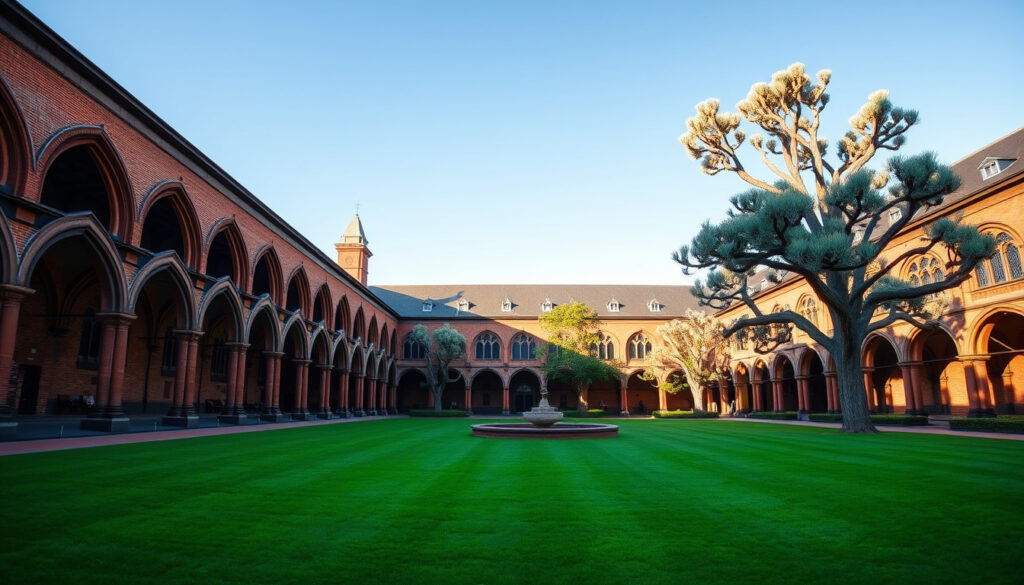
University of Melbourne: #1 in Australia, QS #19 2026
The University of Melbourne holds Australia’s top spot in global rankings and draws students from over 150 countries, yet admission intensity varies dramatically across its programs — with competitive pathways accepting as few as 5–10% of applicants. Here’s what the rankings, admissions data, and outcomes actually show for 2026.
Founded: 1853 · QS World Ranking 2026: #19 · Australia Rank: #1 · Location: Melbourne, Australia · Type: Public research university
Quick snapshot
- QS #19 globally and #1 in Australia (Top Universities 2026)
- 65,000 students enrolled across seven campuses (Times Higher Education 2026)
- Founded in 1853 — Australia’s second-oldest university (Times Higher Education)
- Exact international student acceptance rate — not publicly disclosed (Admissions data analysis)
- Year-over-year trend for selective program selectivity (Admissions data analysis)
- 47 subjects ranked in world’s top 50 — broadest for any Australian university (Study Melbourne 2026)
- THE #32 globally in 2026 — #1 domestically (Times Higher Education 2026)
- Melbourne maintains top-20 global position despite increased regional competition (Study Melbourne 2026)
- Selective programs (Medicine, Law) likely to remain most competitive (Admissions tracker)
| Attribute | Value |
|---|---|
| Established | 1853 |
| Students | 65,000 |
| QS Ranking 2026 | #19 |
| Australia Rank (THE 2026) | #1 |
| International share | 36–45% |
| Website | www.unimelb.edu.au |
Is Melbourne Uni hard to get into?
The short answer: it depends on the program. The University of Melbourne’s overall acceptance rate sits around 77%, which sounds generous on paper. But that figure masks significant variation between undergraduate pathways and graduate coursework degrees.
Acceptance rate details
For domestic undergraduate first-preference applicants, the university receives roughly 13,000 applications annually and makes between 9,500 and 9,800 offers, translating to a 70–75% offer rate for initial preferences. The yield rate — offers converted to actual enrollments — runs approximately 64–66%. These numbers suggest the university casts a wide net in admissions but faces real competition to convert offers into enrolled students.
“The 77% overall figure masks a two-tier reality — most undergrad programs are accessible with solid ATAR scores, but professional graduate programs operate on an entirely different competitive plane.” — University admissions analyst, Edvise Hub
Entry requirements
Domestic undergraduate entry hinges primarily on ATAR (Australian Tertiary Admission Rank) scores, with most bachelor degrees requiring minimum thresholds that place Melbourne among the highest-ATAR universities in the country. For international students, requirements vary by country of prior study and program level, but undergraduate entry generally requires completion of equivalent secondary qualifications with strong academic standing.
International student tips
International students represent approximately 36–45% of the total student body, drawn from over 150 nationalities. This makes Melbourne one of the most globally diverse university communities in Australia. Prospective international applicants should note that the university does not publicly disclose a specific international acceptance rate, so applying with credentials above minimum thresholds strengthens an application considerably.
“Without a published international acceptance rate, the best strategy is exceeding published minimums and submitting applications early — the pool is competitive and rolling offers deplete available places.” — International admissions counselor, Gradding
Medicine and Law operate on an entirely different scale. Selective programs have acceptance rates reported as low as 5–10%, placing them among the most competitive graduate pathways in Australia.
What is the #1 university in Australia?
By the Times Higher Education World University Rankings 2026, the University of Melbourne holds the top position among Australian institutions. The QS World University Rankings 2026 independently confirms this standing, placing Melbourne at #1 nationally while ranking it 19th globally.
National rankings overview
This #1 position is not cosmetic. Melbourne achieved 47 subjects ranked within the world’s top 50 in the QS World University Rankings by Subject 2026 — the highest breadth of any Australian university. Its strongest subject showings include Law at #11, Life Sciences & Medicine at #14, Education at #15, and Arts & Humanities at #16 globally.
Comparison with Sydney and others
Australian universities occupy distinct niches rather than direct competition. Monash University ranks #2 globally in Pharmacy & Pharmacology, RMIT ranks #15 globally in Architecture/Built Environment, and Deakin University ranks #11 globally in Sports-related Subjects. Melbourne’s breadth advantage makes it the preferred option when students seek strongest overall institutional prestige rather than program-specific strength.
For graduate employers scanning resumes globally, Melbourne’s top-20 QS ranking and #1 domestic position signal institutional pedigree that holds weight across industries — from law and medicine to humanities and social sciences.
Is the University of Melbourne a prestigious university?
By any global measure, yes. The University of Melbourne ranks #19 in the QS World University Rankings 2026 and #32 in the Times Higher Education World University Rankings 2026. Both placements place it firmly in the global top 35, with a consistent track record of top-20 QS placement over recent years.
Global recognition
The institution’s 385,000+ alumni network spans more than 170 countries, with 50,000 living overseas — a global footprint that translates to networking advantages in international job markets. The university’s research output and citation metrics consistently support its ranking positions.
QS and THE rankings
Rankings bodies evaluate different metrics. QS weighs international faculty ratios, research citations, and academic reputation — areas where Melbourne scores strongly. THE incorporates teaching environment, research quality, industry income, and international outlook. Melbourne’s position near the top of both rankings reflects balanced institutional strength rather than excellence in isolated areas.
What is the hardest university in Australia to get into?
Selective-program data suggests the University of Melbourne ranks among Australia’s most competitive institutions for graduate-level entry, though “hardest” depends on which metric you prioritize.
Admissions competitiveness
For undergraduate entry, Melbourne’s ATAR thresholds rank among the highest nationally. For graduate programs — particularly Medicine and Law — acceptance rates reportedly fall to 5–10%, making these among the most selective pathways in Australian higher education.
Program-specific difficulty
Melbourne’s graduate-entry model for many professional degrees means applicants compete after completing an undergraduate degree, adding a layer of selectivity beyond undergraduate-only universities. The Doctor of Medicine (MD) and Juris Doctor (JD) both attract thousands of applicants for limited places, with selection considering academic performance, aptitude tests, interviews, and additional criteria.
How expensive is it to live in Melbourne?
Melbourne consistently ranks as one of the more affordable major cities in Australia compared to Sydney, though costs remain significant for students moving from regional areas or international destinations.
Cost of living breakdown
Students should budget for accommodation ($200–$400 AUD weekly depending on proximity to campus and housing type), food ($100–$200 weekly), transport ($30–$60 monthly with student concessions), and utilities. International students holding study visas can work up to 48 hours fortnightly during term, providing income-earning opportunities to offset costs.
Student budget tips
Melbourne’s seven campuses are distributed across the city, with the Parkville campus in inner Melbourne commanding premium accommodation costs. Students willing to live in nearby suburbs like Carlton, Fitzroy, or Brunswick can reduce commute times while accessing reasonably priced shared housing. The university offers limited on-campus housing, with waitlists common for first-year students.
Upsides
- Australia’s top-ranked university globally
- 47 subjects in world’s top 50 (QS 2026)
- 65,000-student body with 150+ nationalities
- 385,000+ global alumni network
- Strong programs: Law (#11), Medicine (#20), Education (#15)
Downsides
- Medicine and Law acceptance rates reportedly 5–10%
- International acceptance rate not publicly disclosed
- High ATAR thresholds for undergraduate entry
- Premium accommodation costs near Parkville campus
- Graduate-entry model adds selectivity layers
Across Australian universities, Melbourne and its peer institutions serve different strengths: Melbourne offers breadth, Monash dominates pharmacy research, RMIT leads in architecture, and Deakin excels in sports science. The comparison table below maps these differences directly.
| University | Strength area | QS Ranking 2026 |
|---|---|---|
| University of Melbourne | Overall / breadth (47 top-50 subjects) | #19 globally |
| Monash University | Pharmacy & Pharmacology | #2 globally |
| RMIT University | Architecture/Built Environment | #15 globally |
| Deakin University | Sports-related Subjects | #11 globally |
The implication: students should evaluate Australian universities by program-specific strength rather than overall prestige alone — Melbourne wins breadth, but Monash, RMIT, and Deakin each dominate their respective fields.
Related reading: Fun Things to Do in Melbourne · Public Holidays Australia 2025
Melbourne’s university landscape features the nationally dominant University of Melbourne alongside Swinburne rankings and campuses, which punches above its weight in QS despite smaller scale.
Frequently asked questions
What is the University of Melbourne website?
The official website is www.unimelb.edu.au, where prospective students can access application portals, program listings, and scholarship information.
What are University of Melbourne scholarships?
The university offers merit-based and equity scholarships ranging from partial fee waivers to full scholarships covering tuition and living expenses. International students, postgraduate coursework students, and domestic students from low socioeconomic backgrounds each have dedicated scholarship streams. Check the official scholarships page for current availability and deadlines.
Is University of Melbourne better than Harvard?
By global rankings, Harvard typically ranks ahead of Melbourne (QS #3 globally in recent years). However, Melbourne ranks #1 in Australia, offers strong regional advantages for employment in the Asia-Pacific, and costs significantly less for domestic and international students. “Better” depends entirely on program strength, career location, and budget rather than a universal ranking.
Where is the University of Melbourne campus?
The main Parkville campus sits in inner Melbourne, approximately 2 kilometers from the central business district. The university operates seven campuses total, including Southbank (arts), Werribee (veterinary and agricultural), and several specialist research sites across Victoria.
What is University of Melbourne Medicine like?
The Doctor of Medicine (MD) at Melbourne ranks #20 globally in Life Sciences & Medicine by QS 2026. Entry is graduate-only, highly competitive (acceptance rates reportedly 5–10%), and includes aptitude testing, interview performance, and academic history. The program includes clinical placements across Melbourne’s hospital network.
Does University of Melbourne offer Architecture?
Yes, the Melbourne School of Design offers architecture programs, though RMIT University ranks higher globally (#15 vs Melbourne’s architecture placement in broader built environment subjects). Melbourne’s architecture program appeals to students prioritizing a comprehensive design education within a broader research university environment.
What is the University of Melbourne acceptance rate?
The overall acceptance rate is approximately 77%. Domestic undergraduate first-preference acceptance runs 70–75%, while competitive graduate programs (Medicine, Law) reportedly accept just 5–10% of applicants. The international acceptance rate is not publicly disclosed.
How does University of Melbourne rank globally?
QS World University Rankings 2026: #19 globally. Times Higher Education World University Rankings 2026: #32 globally. Within Australia, Melbourne holds #1 in THE’s national ranking. It achieved 47 subjects within the world’s top 50 in QS subject rankings — the most for any Australian university.
More related posts
 What Happened to Colin Fassnidge? Cocaine Charge & Career
 Meg Donnelly: Biography, Relationships and Career
 Monica Lewinsky Today: Age, Net Worth, Life After Scandal
 Red Gum BBQ: Menu, Locations, Booking & Takeaway Guide
 Matty Johns: Bio, Reunion with Andrew, Podcast, NRL Career
 David Boon: From Cricket Star to ICC Match Referee – Facts & Myth
 Charlie Puth: Biography, Songs, Controversies, and Synesthesia
 It’s a Wonderful Life – Plot, Cast, History and Where to Watch
