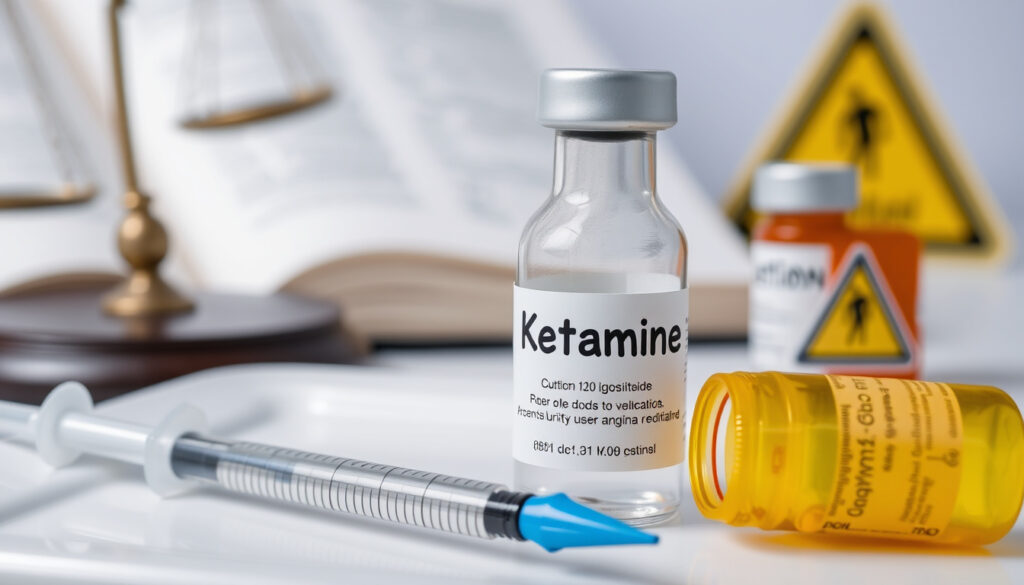
What Is Ketamine? Definition, Medical Uses, Legality & Risks
You’ve probably heard the name ketamine tossed around — maybe as a club drug from the ’90s, or more recently as a breakthrough treatment for depression. What’s less obvious is how one substance can be both a veterinary anesthetic and a cutting-edge antidepressant, and why it’s sparked everything from federal regulations to celebrity endorsements.
Drug Classification: Dissociative anesthetic, NMDA receptor antagonist · Legal Status in the US: Schedule III controlled substance · Year Synthesized: 1962 · FDA Approval for Anesthesia: 1970 · Common Street Names: Special K, Vitamin K, Kit Kat · Approved for Depression (Esketamine): 2019 (Spravato)
Quick snapshot
- Ketamine is a dissociative anesthetic and NMDA receptor antagonist (DEA Drug Fact Sheet)
- Classified as Schedule III controlled substance in the US (DEA Diversion Control Division)
- Esketamine (Spravato) approved for depression in 2019 (Proskauer Legal Analysis)
- Long-term cognitive effects of repeated use are still under investigation
- Exact mechanism of antidepressant action is not fully understood
- Addiction potential varies widely; some develop dependency
- 1962: Calvin Stevens synthesizes ketamine at Parke-Davis (Wikipedia)
- 1970: FDA approves as general anesthetic (DEA Drug Fact Sheet)
- 2019: FDA approves esketamine for depression (Proskauer Legal Analysis)
- Expanding ketamine therapy clinics across the US
- Growing research into psychedelic-assisted therapy
- Debate over microdosing in business culture gains traction
Six key facts define ketamine’s profile — one pattern: a drug with opposing reputations as a lifesaving medicine and a recreational substance.
| Label | Value |
|---|---|
| Drug Class | Dissociative anesthetic; NMDA receptor antagonist |
| Legal Status (US) | Schedule III controlled substance |
| Medical Uses | Anesthesia, treatment-resistant depression, pain management (off-label) |
| Common Street Names | Special K, Vitamin K, Kit Kat, Jet |
| Route of Administration | Intravenous, intramuscular, intranasal (Spravato), oral |
| Year First Synthesized | 1962 |
The pattern here: each row captures a different facet of a single drug that defies easy categorization.
What type of drug is ketamine?
Ketamine doesn’t fit neatly into one box. It’s a dissociative anesthetic that produces feelings of detachment from your body and environment, alongside hallucinogenic effects. The DEA (U.S. Drug Enforcement Administration) classifies it as a Schedule III non-narcotic controlled substance — meaning it has accepted medical use but also a potential for abuse that may lead to moderate or low physical dependence or high psychological dependence.
Is ketamine an opioid?
- Ketamine is not an opioid. It does not bind to opioid receptors in the brain.
- It’s a NMDA receptor antagonist — it blocks the N-methyl-D-aspartate receptor, altering perception, pain, and mood.
- The DEA (U.S. Drug Enforcement Administration) categorizes it separately from opioids entirely.
Is ketamine a tranquilizer?
- Ketamine is sometimes described as a tranquilizer, but technically it’s a dissociative anesthetic.
- It can cause sedation, immobility, relief from pain, and amnesia — effects that overlap with tranquilizers but via a distinct mechanism.
- The U.S. Department of Justice NDIC (National Drug Intelligence Center) notes its predominant legitimate use is as a veterinary anesthetic.
Is ketamine natural?
- Ketamine is a fully synthetic compound. It was first synthesized in a laboratory.
- It is derived from cyclohexanone, not from any plant or natural source.
- The Wikipedia (general encyclopedia) describes it as a cyclohexanone-derived general anesthetic.
Patients considering ketamine for depression often confuse it with opioids or natural remedies. The reality: it’s neither. That matters for everything from drug testing to addiction risk assessments. For doctors prescribing ketamine therapy, the patient’s first question is often “Is this like an opioid?” — the answer is no, which changes the entire risk-benefit calculation.
What is ketamine used for?
Ketamine’s uses span from operating rooms to psychiatric clinics, with a parallel life as a recreational club drug. The FDA originally approved it as an injectable short-acting anesthetic for both humans and animals in 1970.
Medical uses of ketamine
- General anesthesia: Approved for induction and maintenance — used in emergency rooms, operating rooms, and battlefield medicine.
- Treatment-resistant depression: Esketamine (brand name Spravato) was FDA-approved in 2019 specifically for patients who haven’t responded to at least two oral antidepressants.
- Off-label uses: According to a PMC peer-reviewed article (Vujović et al., 2023), ketamine has found a place in the treatment of asthma, epilepsy, depression, bipolar affective disorders, alcohol and heroin addiction.
- Pain management: Used off-label for chronic pain conditions, especially when standard painkillers fail.
Recreational use and club drug scene
- Known on the street as “Special K,” “Vitamin K,” “Kit Kat,” and “Jet.”
- Users seek its dissociative and hallucinogenic effects — a phenomenon documented by the U.S. Department of Justice NDIC (National Drug Intelligence Center) as “an anesthetic abused for its hallucinogenic properties.”
- It gained popularity in the 1990s rave scene.
Is ketamine illegal?
The answer depends entirely on context — possession without a prescription will land you in legal trouble, while a doctor’s order makes it lawful. The DEA Diversion Control Division (U.S. Drug Enforcement Administration) places it in Schedule III of the Controlled Substances Act.
Legal status in the United States
- Ketamine is a Schedule III controlled substance, as confirmed by the DEA (U.S. Drug Enforcement Administration).
- It is legal to possess with a valid prescription from a licensed clinician.
- Possession without a prescription is illegal and can lead to criminal charges.
- The scheduling happened in 1999 — it became a Schedule III non-narcotic substance that year.
International legal status
- Many countries regulate ketamine similarly to the US — requiring a prescription for medical use and penalizing recreational possession.
- Some nations classify it as a narcotic under stricter controls. For example, the UK classifies it as a Class B drug under the Misuse of Drugs Act 1971.
- In Australia, it’s a Schedule 8 controlled drug (controlled medicine) for medical use, with strict penalties for unauthorized possession.
Ketamine’s dual status — legal medicine and illegal street drug — creates a regulatory tightrope. For a patient in the US, the difference between legal treatment and a criminal charge is a single prescription.
Is ketamine addictive?
Yes — and the DEA (U.S. Drug Enforcement Administration) is clear on this: ketamine has a potential for abuse that may lead to moderate or low physical dependence or high psychological dependence. It’s not as physically addictive as opioids, but the psychological hook can be powerful.
Ketamine addiction potential
- Ketamine can lead to tolerance — needing more to get the same effect.
- Cravings and compulsive use are possible, especially with recreational use at high doses or frequent intervals.
- The PMC peer-reviewed article (Vujović et al., 2023) notes its place in the treatment of addiction to other substances, suggesting both risk and therapeutic potential.
Withdrawal symptoms and risks
- Withdrawal from chronic ketamine use can include anxiety, depression, and sleep disturbances.
- Long-term abuse is linked to cognitive impairment — memory and attention problems — and bladder damage (ulcerative cystitis).
- The DEA (U.S. Drug Enforcement Administration) warns that addiction potential varies widely; some users develop dependency while others do not.
Ketamine’s antidepressant effects and its addictive potential come from the same mechanism — NMDA receptor blockade. That paradox is what makes it both breakthrough and risky. For a clinic prescribing weekly esketamine, the focus is on managing tolerance and ensuring no misuse. For a recreational user snorting “Special K” at parties, the addiction pathway is wide open.
What is ketamine’s connection to Elon Musk?
In 2023 and 2024, Elon Musk made headlines by publicly discussing his personal use of ketamine for depression. In an interview, he mentioned using it to help with a “negative frame of mind,” sparking a larger conversation about the normalization of psychedelic substances in business and tech culture.
Elon Musk’s public comments about ketamine
- Musk stated in a 2023 interview that he uses ketamine to treat depression, claiming it helps him stay productive.
- He described it as a tool for managing his “negative frame of mind,” as reported by multiple news outlets.
- His comments brought widespread attention to ketamine therapy among a new audience — tech workers, entrepreneurs, and investors.
The debate around microdosing and productivity
- Musk’s disclosure fueled debate about microdosing psychedelics for cognitive enhancement and productivity.
- Critics argue it risks normalizing drug use without acknowledging the dangers — addiction, cognitive impairment, and legal consequences for those without prescriptions.
- Supporters see it as a step toward reducing stigma around mental health treatment.
Timeline
Four key milestones trace ketamine’s journey from lab to operating room to nightclub to psychiatrist’s office.
- 1962: Calvin Stevens synthesizes ketamine at Parke-Davis Laboratories (Wikipedia (general encyclopedia))
- 1970: FDA approves ketamine as a general anesthetic for humans and animals (DEA Drug Fact Sheet)
- 1990s: Ketamine emerges as a popular club drug, nicknamed “Special K” (U.S. Department of Justice NDIC fact sheet)
- 2019: FDA approves esketamine (Spravato) for treatment-resistant depression (Proskauer Legal Analysis)
The implication: Ketamine’s timeline mirrors a drugs rollercoaster — approved as a lifesaving medicine, abused as a street drug, then repurposed as a psychiatric breakthrough.
Clarity section
Confirmed facts
- Ketamine is a dissociative anesthetic and NMDA receptor antagonist.
- It is classified as a Schedule III controlled substance in the US.
- Esketamine is FDA-approved for depression via the Spravato nasal spray.
- Ketamine can cause hallucinations, sedation, and feelings of detachment.
- It was first synthesized in 1962 by Calvin Stevens at Parke-Davis.
- It is legal for medical and veterinary use with a prescription.
- Possession without a prescription is illegal in the US.
What’s unclear
- Long-term cognitive effects of repeated use are still under investigation.
- The exact mechanism of its rapid antidepressant action is not fully understood.
- Addiction potential varies widely among users; some develop strong psychological dependency while others do not.
- The safety profile of long-term, frequent use for depression hasn’t been fully established.
Quotes
“Ketamine is a dissociative anesthetic that has some hallucinogenic effects.”
DEA Drug Fact Sheet (U.S. Drug Enforcement Administration)
“Ketamine is a cyclohexanone-derived general anesthetic and NMDA receptor antagonist with analgesic and hallucinogenic properties.”
Wikipedia (general encyclopedia)
“Ketamine has found a place in the treatment of asthma, epilepsy, depression, bipolar affective disorders, alcohol and heroin addiction.”
Summary
Ketamine is one of the most versatile and controversial drugs in modern medicine — simultaneously a battlefield anesthetic, a club drug, a rapid antidepressant, and a symbol of Silicon Valley’s self-experimentation culture. For anyone considering ketamine therapy in the US, the choice is clear: work with a licensed clinic that monitors your dosing and mental health, or risk the consequences of unregulated use that range from legal penalties to bladder damage and cognitive decline.
mindbloom.com, marpaminds.com, ketamineresearchfoundation.org, harris-sliwoski.com
For those exploring treatment options, ketamine therapy in Ireland offers a detailed look at how this drug is being used to treat depression.
Frequently asked questions
How long does ketamine stay in your system?
Ketamine has a half-life of about 2-4 hours in the body, but its metabolites can be detected in urine for up to 14 days with heavy use. Standard urine tests can detect it for 2-5 days after a single dose.
Can ketamine cause hallucinations?
Yes. The DEA (U.S. Drug Enforcement Administration) describes ketamine as having “some hallucinogenic effects.” These include visual and auditory distortions, feelings of detachment from reality, and out-of-body experiences at higher doses.
Is ketamine safe for children?
Ketamine is FDA-approved for use as an anesthetic in pediatric patients under medical supervision. Its use for depression or off-label conditions in children is not approved and requires careful risk assessment by a specialist.
What is Spravato?
Spravato (esketamine) is a nasal spray formulation of a ketamine derivative approved by the FDA in 2019 for treatment-resistant depression. It is administered under medical supervision in a certified clinic due to the risk of sedation and dissociation.
How is ketamine different from PCP?
Both are dissociative drugs, but they have different chemical structures and safety profiles. Ketamine has a shorter duration of action (about 30-60 minutes for dissociative effects) and is considered less potent and safer than PCP (phencyclidine). PCP is a Schedule II substance with no accepted medical use in the US.
Can ketamine be used for PTSD?
Ketamine is used off-label for PTSD, but it is not FDA-approved for this purpose. Early clinical trials show promise for reducing symptoms rapidly, though long-term efficacy data is still limited. A healthcare provider can discuss whether this approach is appropriate.
Is ketamine legal in the UK?
In the UK, ketamine is a Class B controlled substance under the Misuse of Drugs Act 1971. Possession without a prescription is illegal and can result in up to 5 years in prison. Medical use is legal with a prescription from a licensed physician.
More related posts
 Tattoo Near Me: Dublin Prices, Walk-Ins & Shops 2026
 Shaun White: Net Worth, Heart Condition & Life After Snowboarding
 Bri bane to Japan: Flight , Time, Budget & Etiquette Guide (2026)
 Connections NYT Unlimited: Free Online Play & Hints
 Craig David: Age, Partner, Songs & Elton John’s Quote
 Romesh Ranganathan: Health, Family, Career & Net Worth
 Ben Melham: Net Worth, Suspension, Children, and Jamie Melham
 Ajwain in English: Carom Seeds, Benefits, and Uses
