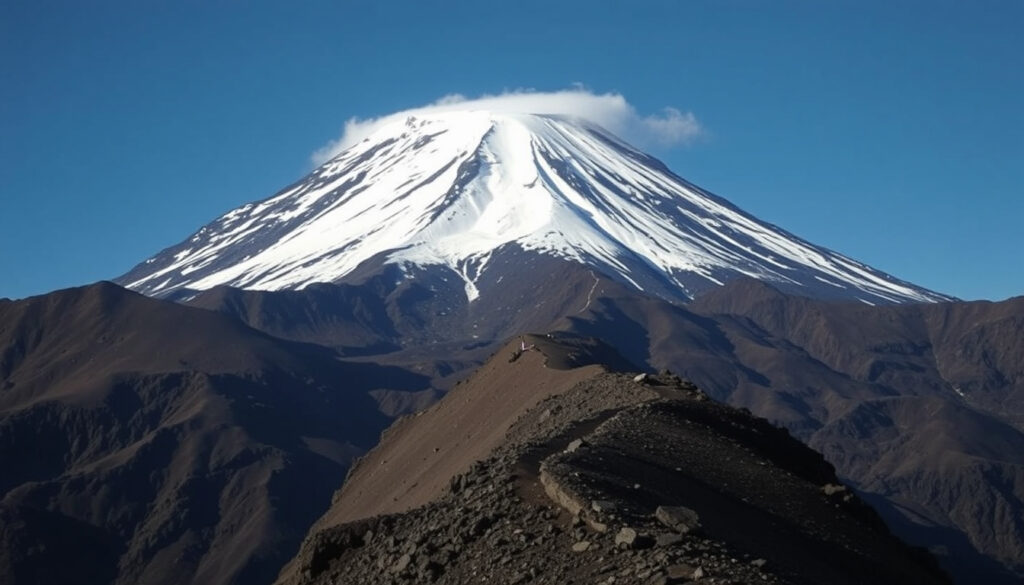
Mountain Kilimanjaro: Danger, Difficulty & Everest
There’s a reason Mount Kilimanjaro pulls in over 30,000 hopeful climbers every year: it’s the world’s tallest free-standing peak, and it’s climbable without ropes, crampons, or any technical gear. But that “walk-up” reputation hides a serious medical reality — altitude sickness kills roughly 10 to 15 people on its slopes annually.
Height: 5,895 m (19,341 ft) ·
Annual climbers: ~35,000 ·
Average success rate: ~65% ·
Reported deaths per year: ~10-15 ·
First ascent: 1889 by Hans Meyer and Ludwig Purtscheller
Quick snapshot
- Summit height: 5,895 m (19,341 ft) — highest in Africa (National Parks)
- No technical climbing required on standard routes (Tusker Trail)
- Death rate below 0.1% of climbers (Think Global School)
- Exact annual death counts vary by source — reporting is incomplete
- Supplemental oxygen need depends on individual altitude tolerance
- The “evil mountain” label is cultural superstition, not scientific
- Summit day begins around midnight; ascent takes 6-8 hours at extreme altitude
- Most routes aim for 5-9 days; longer schedules boost success rates
- Climbing seasons: January-March and June-October
- Book 6-12 months ahead with a licensed operator
The key facts table below shows how the numbers stack up for this African giant.
| Attribute | Value |
|---|---|
| Height | 5,895 m (19,341 ft) |
| Country | Tanzania |
| Continent | Africa |
| First Ascent | 1889 by Hans Meyer and Ludwig Purtscheller |
| Climbing Season | January-March, June-October |
| Average Cost | $2,000-$4,000 |
| Success Rate | ~65% overall, up to 85% on longer routes |
| Deaths per Year | ~10-15 |
How many climbers died in Kilimanjaro?
Annual deaths on Kilimanjaro are estimated at 10 to 15 people out of roughly 35,000 climbers, according to data from THINK Global School (an educational travel nonprofit). That death rate — below 0.1% of all climbers — is far lower than many other high-altitude mountains. The primary causes are altitude sickness, falls on loose scree, and pre-existing medical conditions aggravated by the ascent.
Kilimanjaro’s non-technical reputation lures thousands of under-prepared trekkers each year. The real danger isn’t the climb itself — it’s the body’s response to rapid altitude gain. For a first-time high-altitude trekker, that 0.1% death rate translates to roughly one fatality for every 1,000 summit attempts.
Is Kilimanjaro evil?
The question crops up online from time to time, but there’s zero scientific evidence behind the label. “Evil” associations likely stem from local folklore around the mountain’s volcanic origins and occasional accidents. No geological or mountaineering body classifies Kilimanjaro as dangerous beyond standard high-altitude risks.
What is the death rate on Kilimanjaro?
At under 0.1%, the fatality rate is roughly 10 to 20 times lower than Everest’s 1-2% death rate. Most deaths occur on descent when exhaustion and disorientation peak. The University of Washington (a leading research institution) found that even on far more dangerous peaks like Everest and K2, supplemental oxygen dramatically reduces descent death rates — a lesson that applies to Kilimanjaro as well.
The implication: Kilimanjaro’s danger is a function of preparation, not of the mountain itself.
How difficult is the Mount Kilimanjaro climb?
Technically, Kilimanjaro is a walk-up. No ropes, no ice axes, no technical climbing — standard routes are hiking trails. But altitude makes it “the hardest walk you’ll ever take,” as many outfitters describe it. The summit altitude of 5,895 m means climbers breathe about half the oxygen per breath as they do at sea level, according to THINK Global School.
Success rates tell the story. Overall averages hover around 65%, but that number jumps to 85% on routes that take 7 to 8 days, according to Tusker Trail (a specialist Kilimanjaro outfitter). Shorter 5-day routes drop to around 40%. The implication: time on the mountain is your single biggest safety factor.
What is harder, Everest or Kilimanjaro?
It depends on what “hard” means. Climbing Everest to the summit requires years of technical training, oxygen systems, and exposure to the death zone above 8,000 m. Kilimanjaro demands none of that. But summit day on Kili — a midnight start climbing 1,200 vertical meters in thin air over 6 to 8 hours — is physically punishing.
Tusker Trail notes that some trekkers find Kilimanjaro’s summit day harder than the Everest Base Camp trek, because Kili’s summit push is compressed into a single 6-8 hour slog above 4,700 m, whereas EBC spreads altitude gain over 14 days and 75 miles.
A hiker who can comfortably walk 6 hours on moderate terrain can technically summit Kilimanjaro. But the same person faces a real risk of severe altitude sickness if they choose a 5-day itinerary. The difficulty isn’t the climb — it’s the schedule.
What is the success rate?
Route choice is everything. The 5-day Marangu route has a success rate around 40%, while the 8-day Lemosho route pushes past 85%. The trade-off: longer routes cost more (budget $2,000-$4,000 for a full guided trip) and require more vacation time. For a first-time high-altitude climber, the longer itinerary is the safer bet by a wide margin.
Do you need oxygen in Kilimanjaro?
Most climbers do not use supplemental oxygen on Kilimanjaro. The summit at 5,895 m sits below the 8,000 m “death zone” threshold where bottled oxygen becomes standard on Everest. But “below death zone” doesn’t mean “plenty of oxygen.” At the summit, each breath holds about 50% of the oxygen available at sea level.
Adlers (an altitude medicine and equipment specialist) reports that acclimatization through slow ascent and proper route choice is the primary defense. Some climbers do carry portable oxygen canisters to relieve symptoms of acute mountain sickness (AMS) — headaches, nausea, exhaustion — that can begin as early as 3,000 m. But using oxygen doesn’t replace the need for a gradual ascent; it’s a symptom aid, not a shortcut.
Research from the University of Washington on Everest and K2 showed that supplemental oxygen reduced descent death rates from 8.3% to 3% on Everest, and eliminated deaths on K2 entirely. For Kilimanjaro, where the altitude is lower, the benefit is less dramatic — but the principle holds: oxygen helps at extreme altitude.
The pattern here: supplemental oxygen is useful but not necessary for most climbers on Kilimanjaro.
Why is Mount Kilimanjaro so famous?
Three things make Kilimanjaro a global icon. First, at 5,895 m, it’s the highest peak in Africa and the world’s tallest free-standing mountain — not part of a range, but a massive volcanic cone rising from the East African plains. Second, its location nearly on the equator means climbers experience five distinct ecological zones in a single trek: rainforest, heath, moorland, alpine desert, and arctic summit. Third, it’s one of the world’s most accessible high peaks: anyone with reasonable fitness and a good guide can reach the top without technical gear.
Thomson Treks (a leading Kilimanjaro operator) notes that this combination — altitude, accessibility, and ecological variety — makes it a bucket-list destination for hikers who would never attempt Everest. The mountain draws roughly 35,000 climbers each year, making it the most-climbed major peak on the planet.
Where is Mount Kilimanjaro located?
Kilimanjaro sits in northeastern Tanzania, near the border with Kenya, about 300 km south of the equator. The surrounding landscape is arid savanna; the mountain’s glaciers and snow cap are visible from hundreds of kilometers away. The closest major city is Moshi, Tanzania, which serves as the primary gateway for climbers.
How tall is Mount Kilimanjaro?
The official summit height is 5,895 meters (19,341 feet) above sea level, confirmed by GPS surveys. For context, that’s roughly two-thirds the height of Everest’s summit (8,849 m) — but because Kilimanjaro rises from a plateau at about 900 m, its vertical rise from base to summit is actually greater than most mountains in the Himalayas.
Is Mount Kilimanjaro safer than Mount Everest?
Yes — by every available metric. Kilimanjaro’s death rate of roughly 0.01% of climbers (10-15 deaths among 35,000 climbers) is at least 100 times lower than Everest’s death rate of 1-2% (roughly 5 deaths per 300 climbers attempting the summit each year). But the comparison is apples and oranges: Kilimanjaro has no technical climbing, no avalanche corridors, no crevasses, and no prolonged exposure above 8,000 m.
Tusker Trail emphasizes that Kilimanjaro’s risks are almost entirely medical — altitude sickness, dehydration, hypothermia — while Everest’s risks are both medical and environmental (avalanches, rockfall, frostbite). That makes Kilimanjaro a far safer introduction to high-altitude trekking.
Which trek to choose first, Everest or Kilimanjaro?
If you’ve never done a high-altitude trek, start with Kilimanjaro. It’s shorter (5-9 days vs. 14+ for Everest Base Camp), cheaper ($2,000-$4,000 vs. $3,000-$6,000 for EBC), and requires no technical skills. The Tusker Trail comparison guide notes that Kilimanjaro’s summit day is arguably harder than any single day on the EBC trek, but the overall physical and logistical demands are lower. Success on Kilimanjaro also builds confidence — and a baseline of altitude experience — for tackling Everest Base Camp or Cho Oyu later.
The pattern across all these comparisons: Kilimanjaro is Everest’s accessible cousin. It offers genuine altitude challenge without the lethal technical risks, and it introduces tens of thousands of ordinary hikers each year to the reality of climbing at extreme altitude. That’s not a criticism — it’s the reason Kilimanjaro remains one of the world’s most rewarding treks.
Comparison table: Kilimanjaro vs. Everest
Six dimensions, one pattern: Kilimanjaro trades technical difficulty for altitude risk, while Everest demands both.
| Attribute | Kilimanjaro | Everest |
|---|---|---|
| Height | 5,895 m (19,341 ft) | 8,849 m (29,032 ft) |
| Technical difficulty | None (walk-up) | Extreme (ropes, ice, oxygen) |
| Annual deaths (approx.) | 10-15 | 5-10 |
| Death rate | ~0.01% | ~1-2% |
| Supplemental oxygen required | No | Yes (above 8,000 m) |
| Typical duration | 5-9 days | 60+ days |
| Cost | $2,000-$4,000 | $35,000-$90,000 |
| Best for | First-time high-altitude trekkers | Expert climbers |
The takeaway: these are fundamentally different undertakings, and your choice depends on your experience and goals.
Upsides vs. Downsides of climbing Kilimanjaro
Upsides
- No technical skills required — accessible to motivated beginners
- Summit view of glaciers on the equator is unique
- Multiple route options for different fitness levels
- Relatively affordable compared to other Seven Summits
Downsides
- Altitude sickness is a real risk even on longer routes
- Success rates below 50% on short (5-day) itineraries
- Weather can be extreme: sub-zero summit temps possible
- Glacier retreat means the iconic snow cap is shrinking
Steps: How to climb Kilimanjaro
- Choose your route. Seven main routes exist. Lemosho and Machame have higher success rates (80-85%) because they’re longer. Marangu (5 days) is cheaper but riskier.
- Pick a guide. Licensed operators are mandatory in Tanzania. Book with a reputable company that pays porters fair wages.
- Train for altitude. Start hiking uphill with a loaded pack 3-4 months out. Cardiovascular endurance helps more than leg strength.
- Pack smart. Essential items: waterproof boots, 4-season sleeping bag, thermal layers, sunscreen (UV is intense at altitude).
- Acclimatize properly. “Pole pole” (slowly, slowly) is the Swahili mantra. Don’t skip rest days. Stay hydrated.
- Make summit night count. Depart by midnight with a headlamp, extra layers, and snacks. Expect the hardest physical effort of your life.
- Descend with care. Most accidents happen on descent. Watch your footing. Don’t rush.
kilimanjarosunrise.com, altezzatravel.com, youtube.com, thomsontreks.com, en.wikipedia.org, climbing-kilimanjaro.com
Frequently asked questions
What is the success rate of climbing Kilimanjaro?
Overall ~65%, but rises to 85% on 7-8 day routes and drops to 40% on 5-day routes. Longer itineraries give your body more time to acclimatize.
How much does it cost to climb Kilimanjaro?
Most guided treks run between $2,000 and $4,000 per person, including park fees, guides, porters, food, and basic equipment. Budget operators exist below $2,000 but often compromise on safety and porter welfare.
What is the shortest route on Kilimanjaro?
The Marangu route (5 days) is the shortest and also the only route with hut accommodation. Its shorter schedule drives a lower success rate (~40%).
Do I need a guide to climb Kilimanjaro?
Yes. Tanzanian law requires all climbers to be accompanied by a licensed guide. This is a safety regulation, not a suggestion.
Is Kilimanjaro an active volcano?
Kilimanjaro is a dormant stratovolcano with three cones: Kibo (the highest), Mawenzi, and Shira. Kibo last erupted roughly 360,000 years ago. It’s not considered active, but volcanic vents still emit gases.
How many people climb Kilimanjaro each year?
Approximately 35,000 climbers attempt the summit annually, making it the most-climbed major peak on Earth. About 25,000 folks succeed.
What is the weather like on Kilimanjaro?
The summit is arctic — temperatures can drop to -20°C (-4°F) at night. Lower slopes are rainforest (warm and wet). The best climbing weather is during the dry seasons: January-March and June-October.
Related reading
- Mount Kilimanjaro: The Complete Guide to Africa’s Tallest Peak — In-depth route breakdowns, gear lists, and porter ethics.
- Costa Rica Travel Guide 2025: Safety, Costs, Mistakes to Avoid — For travellers weighing a Kilimanjaro trip against a Central American adventure.
“Mount Kilimanjaro is the highest free-standing mountain above sea level in the world.”
“Kilimanjaro is a tantalising prospect: an enormous, continent-topping high that even ordinary hikers can reach.”
For the ambitious first-time trekker, the choice is clear: book a 7-day route, train for altitude, and prepare for the hardest walk of your life. For everyone else considering an Everest Base Camp trek or a technical Himalayan peak, Kilimanjaro remains the ideal proving ground — a mountain that teaches respect for altitude without the lethal consequences of the death zone. The mountain rewards preparation and punishes haste, making it a fitting challenge for anyone who takes it seriously.
More related posts
 Steady Eddy: Disability, Disappearance, and Return (2026 Tour)
 Kelli Underwood: First Female AFL Commentator Bio
 Fish Sauce: What It Is, Health Effects, Substitutes & Uses
 Yung Kai: Real Name, Age, Nationality, and Gender
 James Marsden: Personal Life, Career, and Relationships
 Talkie AI: Privacy, Safety, Alternatives & Age Restrictions
 Robert F. Kennedy: Assassination and Son’s Health Controversies
 Pan Pacific Singapore – Location, Prices and Reviews
