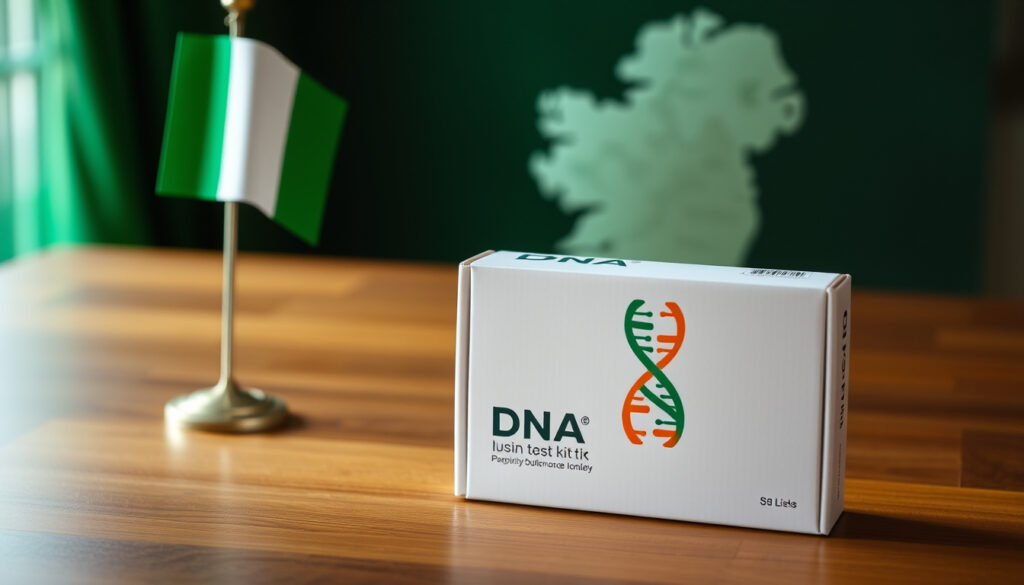
DNA Test Ireland: Cost, Accuracy & Where to Buy a Kit
Few things stir up as many questions as paternity. Whether it’s for peace of mind, child support, or simply curiosity about your family history, DNA testing in Ireland has become more accessible than ever — but navigating the options can be confusing. This guide breaks down the real costs, accuracy rates, and legal considerations so you can make an informed choice. With prices ranging from €119 for a basic paternity test to over €300 for a court-admissible one, knowing what you’re paying for is half the battle.
Average paternity test cost (Ireland): €119–€169 ·
Lowest legal DNA test price (Ireland): €119 (AlphaBiolabs) ·
DNA markers analysed (most labs): 21 to 45 loci ·
Home kit turnaround time: 2–3 working days ·
DNA test accuracy rate (paternity): 99.99%+
Quick snapshot
- Paternity test: €119–€169 (Irish labs) (EasyDNA Ireland paternity test page)
- Home kit: €30–€60 (Boots, online) (MadeForMums report on Boots kit)
- Legal test: €169–€299 (Treoir paternity guidance)
- Ancestry test: €59–€199 (National Journal analysis)
- Paternity tests: >99.99% (EasyDNA Ireland paternity test page)
- Home kits: >99% for sample collection (MadeForMums report on Boots kit)
- Legal tests: >99.99% with chain of custody (homeDNAdirect Ireland legal test info)
- Home kits: 2–5 working days (EasyDNA Ireland FAQ)
- Lab tests: 3–5 working days (homeDNAdirect Ireland legal test info)
- Express: 24–48 hours (extra fee) (Briefingroom.uk guide)
- Home tests not admissible in court (Treoir paternity guidance)
- Legal tests require witnessed sample (homeDNAdirect Ireland legal test info)
- Accreditation: ISO 17025 (EasyDNA Ireland FAQ)
Five key facts, one pattern: the cheapest option is rarely the most legally robust, and the most expensive doesn’t always buy you faster results.
| Item | Value |
|---|---|
| Lowest price (paternity) | €119 (AlphaBiolabs) (Briefingroom.uk guide) |
| Most markers analysed | 45 loci (AlphaBiolabs) (Briefingroom.uk guide) |
| Fastest result | 24 hours (premium service) (EasyDNA Ireland FAQ) |
| Free test available | No, but promotions exist (National Journal analysis) |
How much is a DNA test in Ireland?
The price range for DNA testing in Ireland reveals a key trade-off between cost and legal standing.
Paternity DNA test cost: €119 to €169
- AlphaBiolabs offers a paternity test for €119, with results in 2–3 days (Briefingroom.uk guide).
- EasyDNA Ireland lists a home paternity test at €169, with no extra fees (EasyDNA Ireland paternity test page).
- Genetrack Ireland offers at-home kits starting around €89 (National Journal analysis).
- Boots in Ireland sells home DNA kits (non-legal) around €30–€60 (MadeForMums report on Boots kit).
What this means: Irish consumers face a clear split: a €40 Boots kit gives you peace of mind but zero legal standing. For court purposes, you’ll pay at least €169 — and that’s before travel costs to a sample collection centre.
Ancestry DNA test cost: from €59 to €199
- Ancestry tests from major providers like 23andMe and AncestryDNA range from €59 to €199, depending on the depth of analysis (National Journal analysis).
- These are typically peace-of-mind only and not admissible in Irish courts.
Legal DNA test cost: typically €169 to €299
- homeDNAdirect Ireland lists a legal paternity test at €349, noting that this does not include the sampler’s fee (homeDNAdirect Ireland legal test info).
- Treoir, the Irish national federation for unmarried parents, cites a court-approved paternity test cost of €449 and a peace-of-mind test at €209 (Treoir paternity guidance).
Irish consumers face a clear split: a €40 Boots kit gives you peace of mind but zero legal standing. For court purposes, you’ll pay at least €169 — and that’s before travel costs to a sample collection centre.
The implication: If you need a test for child support or custody proceedings, the cheap home option is a false economy. Always check whether the lab offering the lowest price also provides chain-of-custody documentation.
How accurate is a DNA test?
Accuracy rates for DNA tests are exceptionally high, but the context of the test determines its practical reliability.
What accuracy rate do paternity tests achieve?
When the alleged father, child, and mother are all tested, accredited laboratories report a probability of paternity greater than 99.99% (EasyDNA Ireland paternity test page). Even without the mother’s sample, the figure still exceeds 99.9% in most cases (EasyDNA Ireland FAQ).
Are home DNA test kits as accurate as lab tests?
Home kits from Boots or mail-order services have >99% accuracy for sample collection and analysis, but the lack of a witnessed sample means they can’t be used in legal proceedings. The accuracy of the result itself is comparable — the difference is in the chain of custody.
What factors can affect DNA test accuracy?
- Contamination of the sample (e.g., touching the swab after eating) can degrade results (EasyDNA Ireland FAQ).
- Rare genetic mutations in the tested markers can cause inconclusive outcomes.
- Lab accreditation (ISO 17025) is a strong indicator of reliable processing (EasyDNA Ireland FAQ).
A 99.99% accuracy rate means that in 1 out of 10,000 tests, the statistical probability could point to a different biological father. For most people that’s negligible, but in a courtroom, even that sliver of uncertainty can be challenged.
The pattern: DNA testing is the gold standard for paternity, but the difference between “home” and “legal” is not in the science — it’s in the paperwork.
What can be detected in a DNA test?
DNA tests go beyond paternity, offering insights into ancestry, health, and family relationships.
Paternity and family relationship testing
Paternity tests analyse up to 45 DNA markers to compare the child’s genetic profile with the alleged father’s. Sibling tests, grandparentage tests, and even twin zygosity tests are also available from Irish labs.
Ancestry and ethnic background
Ancestry tests use autosomal DNA, Y-DNA, or mtDNA to trace your ethnic origins and find distant relatives. These tests are popular for genealogy but have no medical or legal use in Ireland.
Health and genetic carrier screening
Some tests can detect gene variants for conditions like cystic fibrosis or BRCA-related cancers. These require a medical consultation and are not part of standard paternity kits.
The catch: Health-related DNA tests sold directly to consumers often lack the regulatory oversight of clinical genetic tests. In Ireland, you should discuss any health screening results with a GP before acting on them.
Do Boots do DNA tests in Ireland?
Boots Ireland offers a convenient entry point for home DNA testing, but with significant limitations.
What DNA test kits does Boots Ireland sell?
Boots Ireland has stocked the “Paternity DNA Test – Next Working Day” kit, which was originally launched in partnership with AlphaBiolabs (MadeForMums report on Boots kit). The kit costs around €39.99 and includes a mouth swab kit; you send the sample to the lab and pay an additional processing fee (typically £129) for the analysis.
Are Boots DNA tests legally admissible in court?
No. Boots kits are for home use only and are not legally admissible. The Treoir (Irish family support federation) explicitly states that self-collected samples lack the chain-of-custody required for legal proceedings.
Boots paternity test price and process
- Kit price: ~€39.99 (Boots Ireland).
- Lab processing: ~€129 (via AlphaBiolabs).
- Express service: ~€329 for same-day results.
- Turnaround: 2–3 working days after sample receipt.
The implication: Boots gives you a convenient, private way to get a paternity answer — but if you need a legal result, you’ll have to go through a different provider.
Where can I get a free DNA ancestry test?
The promise of a free DNA test often comes with hidden costs, particularly regarding data privacy.
Are there legitimate free ancestry tests?
No major provider offers an entirely free ancestry DNA test in Ireland. Some companies, like 23andMe, have run promotional campaigns where you get a free test in exchange for participating in a research study — but these are usually limited to specific regions and often require a paid subscription afterward.
Promotional free tests from companies like 23andMe
In the UK, the UK Biobank has offered free genetic testing to participants, but that is not available in Ireland. Be wary of online ads offering “free DNA test” — they often hide costs for shipping, processing, or data access.
Free ancestry test pitfalls: data use and hidden costs
- Some “free” tests require you to sign up for a subscription (e.g., €99/year) to access your results.
- Your genetic data may be shared with third-party researchers or law enforcement, as per the company’s privacy policy.
- Data breaches have exposed genetic information — for example, MyHeritage suffered a breach in 2018 affecting 92 million users (BBC News report on MyHeritage breach).
The trade-off: A free test is rarely free in the long run. You pay with your data, your privacy, or your wallet.
What is the downside of DNA testing?
Beyond the immediate costs, DNA testing carries risks related to privacy, family dynamics, and data security.
Privacy risks of home DNA test kits
When you send your DNA to a private company, you are entrusting them with extremely sensitive data. Police forces in the US and UK have used genealogy databases to identify suspects — and your Irish relatives could be implicated without their consent. The Treoir (Irish family law guidance) advises caution when using direct-to-consumer kits.
Unexpected paternity or family secrets
Unexpected results like misattributed paternity occur in approximately 1–2% of cases, according to genetic counsellors. This can cause emotional distress for families.
Legal implications of DNA data sharing
HomeDNADirect Ireland warns that their legal test may involve an additional sampler’s fee, but the bigger issue is that once your data is online, it’s hard to retract. In 2018, MyHeritage revealed a data breach that exposed the genetic information of 92 million users (BBC News report on MyHeritage breach).
You take a DNA test to find out who you are — but the company that runs the test may learn more about you than you ever intended to share. For Irish consumers, the safest approach is to use an accredited local lab that does not sell your data.
The catch: The downside of DNA testing is not in the science — it’s in the privacy and emotional fallout. Before you spit in a tube, ask yourself: who else will see this data?
Comparison of DNA Testing Providers in Ireland
Four providers, one clear pattern: the cheapest home kit is also the least legally robust, while the most expensive offers full chain-of-custody accreditation.
| Provider | Home Paternity (€) | Legal Paternity (€) | Accuracy | Turnaround | Legal Admissible |
|---|---|---|---|---|---|
| AlphaBiolabs Ireland | ~€119 | ~€119 | >99.99% | 2–3 days | Yes |
| EasyDNA Ireland | €169 | €179 | >99.99% | 3–5 days | Yes |
| homeDNAdirect Ireland | €209 | €349 | >99.99% | 5–7 days | Yes |
| Boots (AlphaBiolabs kit) | ~€40 + €129 lab fee | N/A | >99% | 2–3 days | No |
The implication: For a legal test, AlphaBiolabs offers the lowest price at €119, but homeDNAdirect and EasyDNA include the sampler’s fee in their quoted price. Always ask for a full breakdown before ordering.
Pros and Cons of Home vs. Legal DNA Testing
Choosing between a home kit and a legal test hinges on your need for court-admissible results versus the convenience of a private check.
Upsides
- Home kits are affordable (€30–€60) and easy to use.
- Results are fast — often within 2–3 working days.
- Privacy: no need to visit a clinic or involve a third party.
- Legal tests provide admissible evidence for child support or custody cases.
Downsides
- Home kits are not legally admissible in Irish courts.
- Legal tests cost significantly more (€169–€349).
- Chain-of-custody procedures require a witnessed sample collection.
- Data privacy risks with direct-to-consumer companies.
How to Get a DNA Test in Ireland: Step-by-Step
Follow these steps to ensure you get the right test for your needs, whether for peace of mind or legal proceedings.
- Decide your purpose: Peace of mind or legal evidence? If you need a court-admissible result for child support, skip the home kit.
- Choose a provider: For legal tests, use an accredited lab like AlphaBiolabs, EasyDNA, or homeDNAdirect. For a private check, Boots or a mail-order kit works.
- Order the kit: Most Irish labs ship a sterile cheek swab kit within 24 hours. Some offer walk-in options in Dublin.
- Collect the sample: Follow the instructions carefully — do not eat, drink, or smoke 30 minutes before. For legal tests, you must attend a clinic where your identity is verified.
- Return the kit: Use the prepaid envelope and send it to the lab. Track the package for peace of mind.
- Receive results: Results are typically emailed or posted within 2–5 working days. Express services (24–48 hours) cost extra.
The catch: Even with a legal test, the court may still require a sworn statement from the laboratory analyst. Always ask the provider if they offer court-ready documentation.
briefscape.uk, easydna.ie, briefingroom.uk, canadianglobal.org
Frequently asked questions
Can I use a DNA test for child support cases in Ireland?
Yes, but only if the test is a legal paternity test with a documented chain of custody. The court will not accept results from a home kit. The test must be conducted by an accredited laboratory and witnessed by a third party.
Do I need a doctor’s referral for a DNA test?
No. You can order a paternity or ancestry test directly from the provider without a medical referral. However, health-related genetic tests may require a doctor’s order.
What is a non-invasive prenatal paternity test?
It’s a blood test that analyses fetal DNA from the mother’s blood to determine paternity before the baby is born. EasyDNA Ireland offers this with a 99.9% accuracy rate, but it is expensive (around €1,200) and is not legally admissible.
How do I collect a DNA sample at home?
Most kits include two sterile buccal swabs. Rub the swab firmly against the inside of your cheek for 30 seconds, let it air dry, then place it in the provided tube. Do not touch the swab tip.
Are DNA tests covered by health insurance in Ireland?
No. Health insurance policies in Ireland do not cover paternity or ancestry DNA tests. Legal tests for court proceedings may be tax-deductible if deemed a medical expense, but this is rare.
What is the difference between a peace-of-mind test and a legal test?
A peace-of-mind test is done at home and gives you a private answer. A legal test involves a witnessed sample collection, a chain-of-custody form, and a laboratory report that can be used in court. The science is the same; the procedure is different.
How long does a DNA test take in Ireland?
Standard processing takes 3–5 working days from receipt of the sample. Express services (24–48 hours) are available from most labs for an extra fee of around €50–€100.
“Our paternity tests are designed to provide a probability of paternity of 99.9% or higher when the alleged father is included, and 0% when he is excluded.”
— EasyDNA Ireland (direct-to-consumer DNA testing service)
“AlphaBiolabs Ireland offers one of the most affordable legal paternity tests on the market at €119, with results in just 2–3 working days.”
— Briefingroom.uk (tech news analysis)
“For legal purposes, a DNA test must be carried out using a strict chain-of-custody procedure. Self-collected samples are not acceptable.”
— Treoir (Irish national federation of services for unmarried parents and their children)
Related reading
For Irish consumers, the choice between a €40 Boots kit and a €169 legal test comes down to one question: do you need a courtroom answer, or just a private one? The science is the same either way. The difference is in the chain of custody — and the piece of paper you get at the end. For anyone facing a child support or custody case, the legal route is the only one that matters. For everyone else, a home kit gives you the answer without the hassle.
More related posts
 Lily Santiago: Age, Biography, Movies, TV Shows, and Family
 MacBook Air M5 Review: Price in Ireland, Specs & Performance
 NAPLAN Past Papers: Free PDF Downloads with Answers
 Michelle Williams: Actress and Singer – Facts and Differences
 Apia Car Insurance: Coverage, Reviews & Quotes Guide
 One Piece Swimsuits in Ireland: Long Sleeve Styles & Shops
 Erik King Biography: Career, Net Worth, and Where He Is Now
 Dexter Keaton: Age, Husband, and Life After Diane Keaton
